Morley family ancestral stories
A journey across the centuries, following the Morley lineage from our modern life in New Zealand all the way back through British history to the Norman Conquest and beyond.
Tracing ancient roots
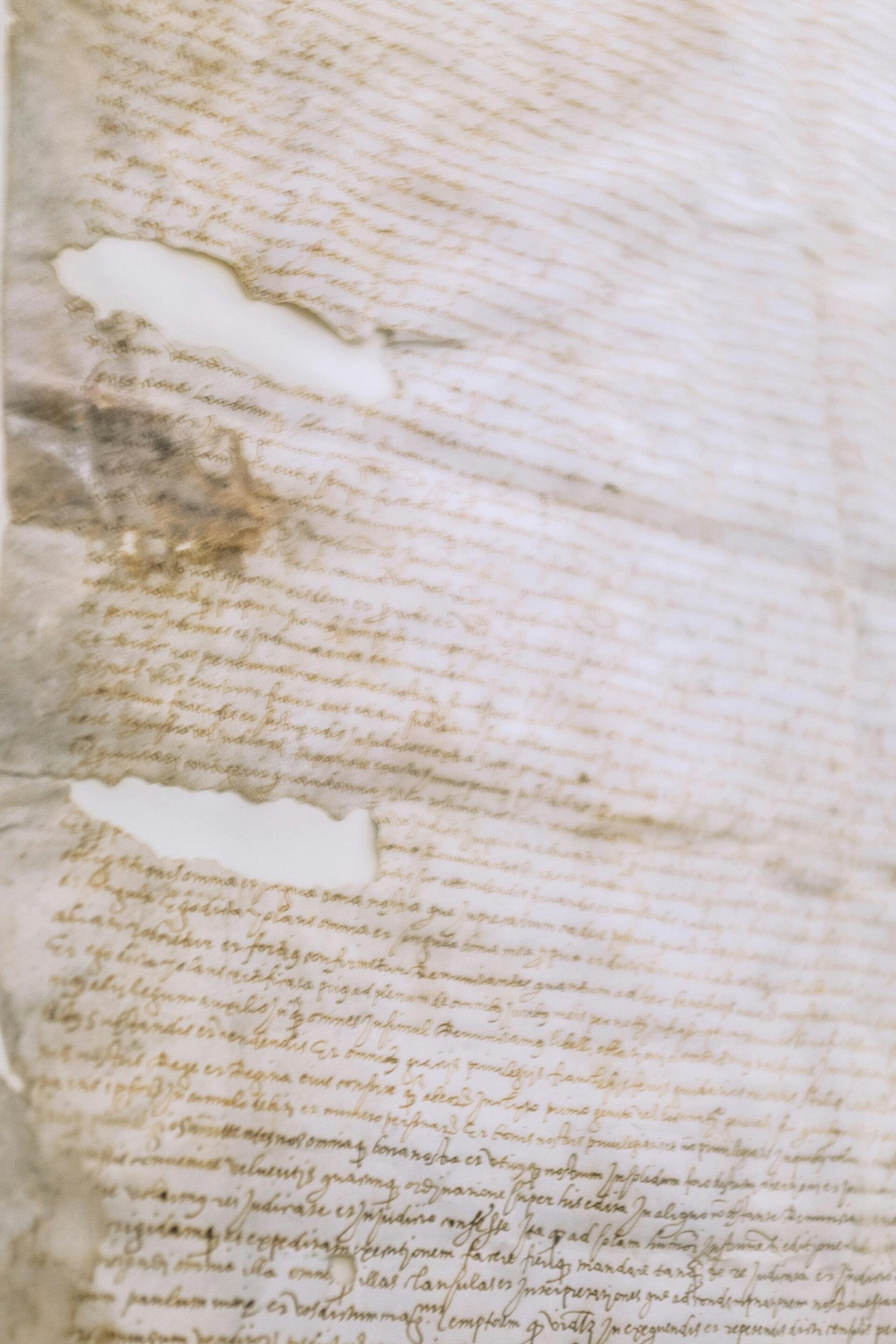
Long before photographs recorded faces and moments, parchment scrolls and heraldic registers documented the earliest Morley predecessors. Tracing this lineage unravels connections that stretch past medieval Britain right back to the transformative era of the 1066 Norman Conquest and earlier.

Generations preserved in charts
Because these stories predate photography, meticulous family history charts, parish records, and historic charters serve as our visual windows into the past. Each branch illustrates how the Morley name endured through feudal shifts, agrarian transitions, and historical upheaval.
The Morley Family Ancestral Stories
My maternal grandmother was born Hilda Lydia Morley on the 21st of September 1898 at the Wairau Valley, Marlborough, Marlborough, New Zealand. Her parents were John William Mortley (1872-1935) and Elizabeth Ella Higgs (1877-1958). It was her grandfather John Lewis Morley who emigrated to New Zealand from Suffolk, England, as described in Early Arrivals.
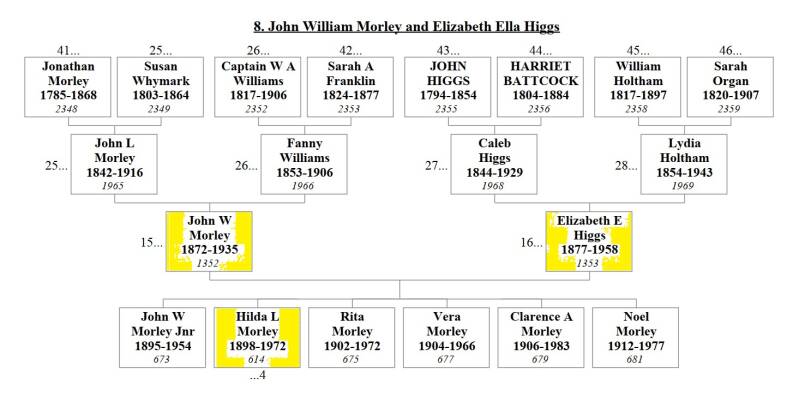
Some thoughts and observations on the origins of the Morley family in my family history.
So, who were the Morley’s, and where did they come from? I set out to do a little digging. It turned out to be quite a journey.
Morley is quite a common name in New Zealand. Accordingly, there are lots of actual and potential relatives here. But I was interested in the backstory. Where did they originate, and what were their stories? After all, everyone here came from somewhere else originally, and not that long ago, either.
Before we start, can I take a moment to make some qualifications. I enjoy tracing my family tree back in time immensely. But you don’t have to go too far back for accuracy and precision to fall away. To find that there are gaping holes in documented records. To find that your understanding of histories and events might differ from those held by some others. To find yourself struggling with unfamiliar languages and nomenclature. If you are really lucky, you can trace direct lineages. But as often as not, they can end abruptly, with no way around.
I am also very conscious of how lucky I am and how easy I have it. I have a whole world of historical documents instantly at my disposal, and easy ways to sift through them to find what I am looking for. But most, if not all of them, particularly the older ones, are the result of years of meticulous study, painstaking research, and scholarly investigations. I must start by acknowledging the huge efforts of those writers.
Back to the Morelys in my family tree. While some of them settled and lived in central Hawkes Bay, my great grandfather John William Morley was born in Collingwood, in Golden Bay. It was his father, John Lewis Morley, who was born in Ipswich, Suffolk, England and who came out, settled and raised a family in Collingwood. Records of his immigration are not obvious, but perhaps his initial occupation as a master mariner gives us a hint of how he arrived. After his wife Fanny died, he appears to have moved to Gisborne, where he died of heart failure.
Working back from John Lewis, there are four generations of Morleys (three Jonathan’s and a John Eric) who were born, lived, loved, married, had children, and died in Walsham Le Willows, an agricultural village in Suffolk, England. The name of Walsham is Saxon – the original form was Waeles-ham, or ham(let) of the Welsh probably relating to surviving Romano-British inhabitants. John Eric was born in 1680. His father Henry Morley was born in Bury St Edmunds, Suffolk in 1639, about 12 miles to the west.
While that may sound bucolic, it must be remembered that life back then was simple but not easy, rustic and still somewhat feudal. Most villagers lived in timber houses with thatched roofs with no power, running water, sanitation, nor access to education or medicines. Communities were tight knit, mostly illiterate and insular, and roads were often unpaved and in poor condition, making travel arduous and traders infrequent. The church was the focal point of gatherings and festivities. The spectre of the Black Death (bubonic plague) still stalked the land. In Norfolk and Suffolk around 57,000 people died of the plague. In fact, so many people died in Suffolk and Walsham that there simply wasn’t enough left to work the land. This ultimately began the breakdown of the existing feudal system and in places, whole manors and villages were abandoned.
From there the trail moves north to North Lincolnshire, and while fainter, it gets distinctly more interesting. By now it is 1608, when Henry’s father Thomas was born to Edmund Morley Jr at Holme. Both Edmund Jr and his father, Edmund Snr were born and died in Holme. Edmund Snr was the son of William Morley, who was born in Holme in 1507, and who married Eleanor Skipworth, daughter of Sir John Skipworth, Sheriff of Lincolnshire in 1528. His father was John Morley (1480 – 1557), and his father was Henry Morley (1466 – 1489) both of Holme, Lincolnshire. Holme was also a small, rural agricultural village. Its daily life shared many characteristics with Walsham le Willows. We have now gone back directly for 15 generations.
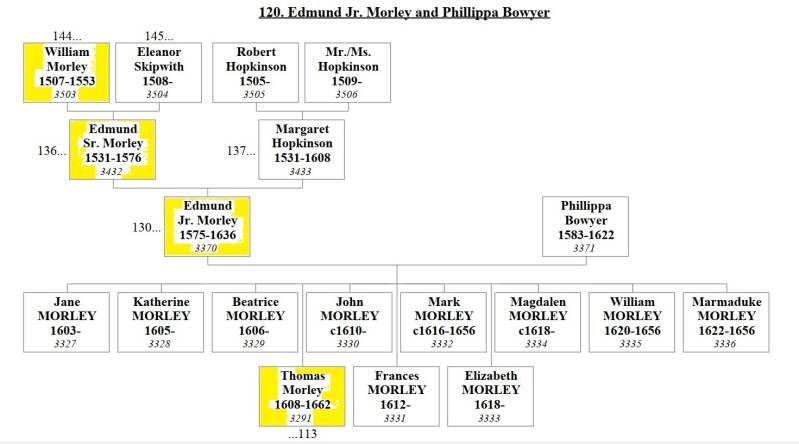
Now the trail shifts again. Henry’s father was Sir John Morley (de Morley) who was born in Swanton Morley, Norfolk, England in 1430, and who died in Morley St Peter, Norfolk, England in 1495. We get our first glimpse of an ancestral home and lands, a Knight of the Realm, and a suggestion of the Morley’s origins. But there is a long way to go yet.
It is interesting to speculate what, if any, effect the War of the Roses (1455 – 1485) had on the family, or even who they supported. We do know that its battles destroyed many lives. Was it the catalyst that moved the family from an ancestral manor to an agricultural village?
John’s father was Lord William De Morley (1405 – 1460) who was born in either Swanton Morley or Holme (accounts differ) and died in Swanton Morley. In 1429 he married Lady Anne Radcliff, the daughter of Sir Henry and Lady Margaret de Radcliffe. The Radcliff’s are a fascinating branch of this tree and well worth an essay of their own. They were the first branch that I followed all the way back to William the Conqueror and the Norman invasion of 1066, and from there back to France, beginning to explain why most of my DNA originates in Western and Northern Europe. They are a good example of three points of context. As we have seen earlier, these families usually get named after the places they originate from. Thus, the Radcliffe family lived in Lancashire at Radcliffe. This name translates as red cliff from its Saxon origin, indicating originally the town was distinguished by its proximity to such a landmark on the east side of Irwell. So too with Swanton Morley in Norfolk. “Swanton" is derived from the Old English for herdsman's enclosure. The second part, "Morley", refers to the de Morley’s, who held the lordship of the manor in the 1300’s.
Secondly, it must be remembered that the English language only became standardised in the last few centuries, and we are back well beyond that. Spelling variations are common among Anglo-Norman names. Thus, Radclyffe has been recorded as Radcliffe, Radcliff, Radclyffe, Ratliffe, Ratlife and many more. Equally, Morley can also be found as Morle, Morli, Morlay, Morelea or Morlei or Morleia. Some of those are probably derived from the Saxon or old English words mor or more (moor) and lege or lei (meaning a lea, clearing or meadow). Some Morleys are French in origin, perhaps making their first appearance in England at the time of, or perhaps shortly after, the Norman Conquest of 1066.
Thirdly, at that time in Norfolk, England, life was centred around feudalism, agriculture, and a rigid hierarchical social structure. It was a time of great social inequality, with the lord (and lady) of the manor enjoying privileges and authority, while the peasants and serfs had limited freedoms and were tied to the land. Manors typically consisted of the lord's great house or castle, agricultural land, meadows, pastures, forests, and usually a village inhabited by peasants or serfs. The lord’s word was law; they collected rents and taxes from the peasants, dispensed justice, and organized the administration of the manor. The manor usually had a church, and religion played a central role in the daily lives of all the manor's inhabitants. So, the two major sources of our knowledge and records of such times were scholars (who were probably from the ruling class or wealthy merchant trading families, as they would be most likely to be literate), or members of Abbeys, Cathedrals or churches. The purpose was clear since the 1086 Doomsday Book – to collect taxes for the King.
Today at Swanton Morley there are no remains of Morley Castle save a moated space adjoining Castle Farm, with a few traces of foundations. Very few traces of the castle walls are left. A plaque attached to a signboard on Swanton Morley village green states that "William de Morley" was Lord of the Manor in the C15th, hence Morley Castle. On the top of a hill to the north of the village lies All Saints' Church, a large 14th-century parish church built to an ambitious design in comparison to the size of the village.
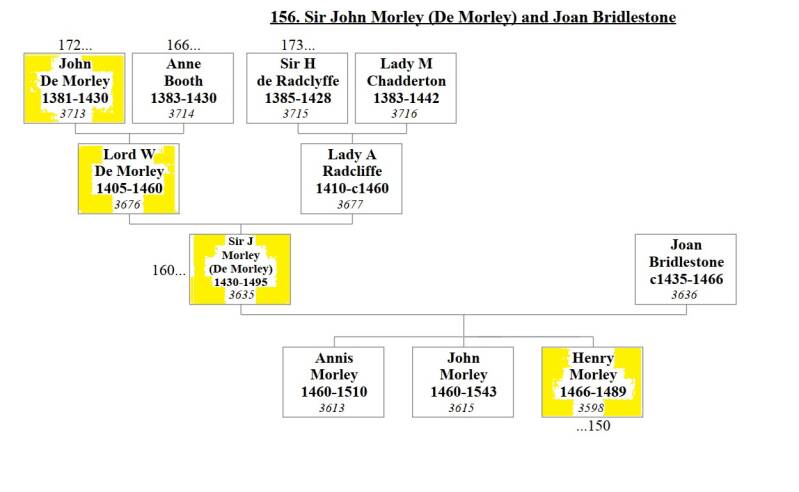
William’s father was also called John de Morley, who was born in 1381. In 1400 he married Ann Booth, and he died in 1430, aged 49. His father was Richard de Morley, who was born in Norfolk in 1341, and who married Margaret de Witherington in 1366. He died in 1416 at Landrethun-Le-Nord, Pas-De-Calais, Hauts-De-France, France. This was only one year after the Battle of Agincourt, (October 25, 1415), the decisive battle in the Hundred Years' War (1337–1453) that resulted in the victory of the English over the French, and led to the Battle of Rouen, (31 July 1418–19 January 1419) when Henry V of England besieged and took the city of Rouen allowing him to capture Normandy during the Hundred Years' War. At 74 years old it seems unlikely that Richard was soldering, but it is somewhat of a coincidence.
Richard de Morley’s father was Sir William de Morley who was a Lord and a Baron. As heir, he inherited the titles of 3rd Baron of Hockering and Lord Marshall of Ireland (on the death of his mother). He was born in Hockering, Norfolk on June 24th, 1319. William married Cecily Bardolf, the daughter of Sir Thomas Bardolf (second Baron of Wormegay) and Lady Anne de Grandeson of Hertfordshire, in about 1326. William served in Gascony in 1354 and joined an expedition of Edward the Black Prince in France the following year. He was knighted by then. In 1370 William was ready to bring 20 soldiers to fight in France and was one of the commissioners appointed to bring ships from the North of England for use in Edward III's French war.
In July 1341 William gained possession of his mother's lands in Cambridgeshire, Essex, Hertfordshire, Huntingdonshire, Norfolk and Suffolk. In 1360 he was granted possession of his father's lands in Essex, Hertfordshire, Norfolk, Suffolk and Ireland. He also held land in Staffordshire.
William de Morley, Knt., 3rd Lord Morley died on 30 April 1379 at Hallingbury, Essex, England. His second son, Thomas de Morley, K.G., was his heir. William and his wife Cecily (who died in November 1386) were buried in the Austin Friars church, Norwich, Norfolk, England. He was my direct ancestor, twenty generations ago.
Sir Robert de Morley
Sir William’s father was Sir Robert de Morley, 2nd Baron Morley and Admiral. He was born around 1295 at Morley, Norfolk, England. He was an English Knight and naval officer who served as Admiral of the North four times from (1339–42, 1348–49, 1350–51 and 1355–56) in the service of King Edward III. He was the only child of Sir William de Morley, 1st Baron Morley, (1265–1302) and Cecily de Mohaut, (1273–1316).
Robert Morley, the second Baron, had a distinguished military and administrative career and served in Parliament for almost 40 years. He was summoned to parliament from 20 November 1317 to 15 December 1357 and he was active in numerous military campaigns including Edward II's untimely expedition to Scotland in 1322 and the Weardale campaign in 1327, which ended inconclusively at Stanhope Park. He fought also at the battle of Halidon Hill on 19 July 1333 and served in Scotland during the winter of 1334–1335.
On 18 February 1339, Morley became admiral of the northern fleet and quickly established himself as an effective naval leader. During the summer of that year, having first countered a French maritime attack on the Cinque Ports, he successfully raided the Normandy coast. Later, in the battle of Sluys on 24 June 1340, he broke the first, second and third lines of the French fleet in the Zwin estuary and won the greatest naval victory the English had yet achieved. This was the bloodiest battle of the Hundred Year’s War and soon after he sailed to Normandy and burnt eighty of the French ships and two villages.
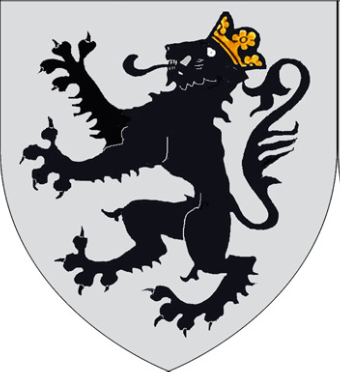
Morley continued to serve as admiral of the northern fleet until December 1342 and it was in that role that he accompanied the earl of Northampton's expedition to Brittany in August 1342. Four years later, in July 1346 he travelled to Normandy with the army of Edward III and fought at the battle of Crécy and the siege of Calais. During the siege Morley played an active role in the blockade, while defending his right to bear the arms ‘argent, a lion rampant sable, crowned and armed or’, against a legitimate challenge from Sir Nicholas Burnell before the court of chivalry. The evidence presented at the court, however, indicated that the Morleys arms did not originally include the gold crown on the black lion, and it appears that Edward III intervened personally to settle the case following Morley’s valiant deeds on the battlefield. The Morley coat of arms is thought to date to the time of Edward I (1272-1307).
The Morley Coat of Arms (Norfolk)
By March 1355, Morley was reappointed admiral of the northern fleet and in August of the same year he became constable of the Tower of London, posts that he continued to hold until his death in France on the 23 March 1360 during the campaign begun by Edward III the previous year. Prior to the creation of a single Admiralty Office in 1414 that encompassed all of England the English Navy was administered through geographical commands or regional Admiralties.
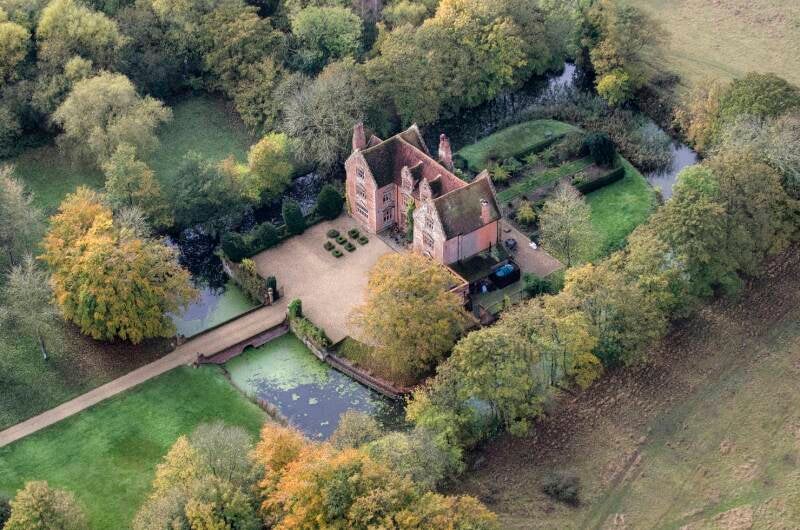
His first marriage in 1316 was to Hawise Le Marshal, (1301–1329) at Raglan Castle, Usk, Monmouth, Wales. She was the daughter of Sir William le Marshal, 1st Lord Marshal, Marshal of Ireland and Christian de Burgh. They had one son Sir William Morley, 3rd Baron Morley. Robert inherited the title of Earl Marshal of Ireland through his marriage to Hawise Le Marshal whose brother John Marshal, 2nd Baron Marshal died without a successor. He retained the title for life. He succeeded to the titles of Lord Marshall of Hingham and Rye, in right of Hawise his wife following the death of Hawise's brother, John, in 1317. He also acquired estates in Norfolk, Essex, Hertford, and elsewhere, and by July 1324 he had been knighted. It seems that Robert also acquired the manor at Swanton after his marriage to Hawyse Marshal. In about 1200, the manor of Swanton was owned by the Mareschal (or Marshal) family as part of the barony of Rye, and was called Swanton Mareschal. It was not until 1316 that the Morleys became barons of Rye and the name changed to Swanton Morley.
The Morley Hall at Swanton Morley.
His second marriage was to Joan de Tyes around 1335, with whom he had at least two children: Joan de Morley and Sir John Morley. She was born in 1315 at Burgh Wallis, West Riding, Yorkshire, England, the daughter of Henry de Tyes and Margaret de Tiptoft and died at Royden, Norfolk, England on December 24th, 1358. His later grandson was Thomas Morley, 4th Baron Morley. He died in Bourgogne, Marne, Champagne-Ardenne, France on 23 March 1360.
Robert, Lord Morley’s father was William de Morley, and by now the mists of time are starting to get quite thick, and our known or surmised facts are getting fewer and farther between.
WILLIAM DE MORLEY
William de Morley, the son of Robert Morley, was born about 1266 also at Roydon though he was married at Swanton Morley, a hamlet on the south bank of the river Wensum about 14 miles northeast of Wymondham. William de Morley was the first Baron of Morley and Roydon in the reign of Edward I and he was summoned to Parliament from 29 December 1299 to 3 November 1306. He almost certainly gained his title through a series of military actions, initially perhaps by participating in the King’s Welsh campaigns which culminated in the annexation of the Principality by the Treaty of Rhuddlan in 1284. On October 23, 1288, he was appointed to the custody of the lands of John d’Avyllers, deceased, tenant-in-chief. These may well have been close to his other lands at Roydon and Morley.
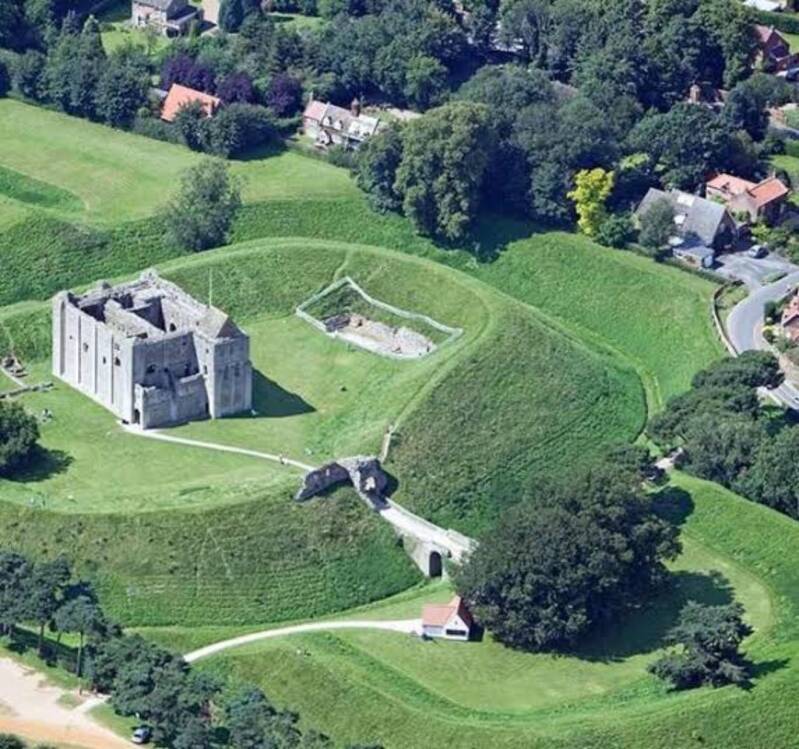
We do not know when William de Morley married Isabel the sister and heir of Robert de Montalt (d.1329), but we do know that they had a son, Robert. The de Montalt family came from Monte Alto, or Montalt, which is now called Mold and is in Flintshire. They were hereditary seneschals of Chester and lords of Mold. In 1267 Robert de Montalt held the castle, the mound of which still stands. As well as estates in Hawarden and Coventry Robert had inherited Castle Rising in Norfolk. However, Isabel died and, some time before October 1295 (see below), William married a lady called Cicely. So, William’s hopes of inheriting the Montalt’s estates came to nothing, because Isabel died before her mother, Emma who later surrendered them to Isabella, Queen Consort of England, mother of Edward III.
Castle Rising in Norfolk
In 1294 William took part in an abortive expedition to Gascony, in the company of the above Roger de Montalt, and under the command of the Earl of Richmond. He served there again in the campaigns of 1295 and 1296. There are various Calendar Rolls, which mention these visits, including the following one from October 1295.
“Grant to William de Morleye, who is going to Gascony on the king’s service, of the custody, for as long as he remains there on the kings’s service, of the manor of Saham, late of Ralph de Tony, tenant in chief, which is in the king’s hands by reason of the minority of the heir, and Cicely, his wife, is to stay there during his absence if she choose.”
If we look at William de Morley’s service in Scotland, a little bit of background will probably be helpful:
In 1286 Alexander, King of Scots, died when he fell off a cliff. The successor to his throne was his three-year-old granddaughter, Margaret. She was the daughter of the King of Norway, but she was a sickly girl, and she died in Orkney on the way back to Scotland. It was after her death that Edward I made his claims of overlordship of Scotland. However, these claims were not accepted by the Guardians of Scotland, so Edward got every claimant to the throne to swear fealty to him for the throne of Scotland. Eventually John Balliol was crowned in 1292, but he then refused to acknowledge Edward as his overlord. In 1295 Edward gave the Scots an ultimatum. He wanted every man of rank to attend him on his forthcoming invasion of France. This was one step too far, and instead the Scots signed a treaty of mutual aid with France. In consequence, Edward invaded Scotland instead. England and Scotland would henceforth be in almost constant conflict for the next 300 years.
Edward began his invasion of 1296 at Berwick, which soon fell. He then routed the main Scottish army at Dunbar, when it was on its way back from raiding the north of England. Having subjugated Scotland, Edward now demanded that all nobles and landowners swear fealty to him. However, in 1297, William Wallace led a rising. John de Warenne, Earl of Surrey, marched north from Berwick and was heavily defeated at Stirling Bridge. Wallace was then knighted and put in sole command of the Scottish troops. Throughout the rest of 1297, Wallace ravaged the Border lands of England for corn and cattle. Such a turn of events brought Edward I back from his negotiations in France with King Philip. However, by early 1298 he had made peace with Philip IV, ending Scotland’s hope of support from France.
Edward I then prepared a formidable force from all over his realm. Eight earls joined him: the Marshal, the Constable, Ralph de Monthemer, Arundel, Guy of Warwick and the young Earls of Lancaster and Pembroke, each bringing their own large contingents of minor knights and infantry, swelling his host to a monstrous size. This huge army eventually met Wallace at Falkirk in July 1298. It was a bitterly hard-fought affair, but it eventually resulted in a resounding victory for the English.
William de Morley went north in the company of Ralph de Monthermer, Earl of Gloucester and Hertford and both survived the battle. The arms of both men appear on the Falkirk Roll, which was composed shortly after the Battle of Falkirk. Although William was summoned for service in Scotland in each year following, up to 1301, there does not seem to have been much action in the years immediately following Falkirk.
He was summoned to Parliament from 29 December 1299 to 3 November 1306 (which was after his death!). By these writs directed at Willelmo de Morle he is held to have become Lord Morley. We know that he died before the end of 1302, because this was the date when his widow and heirs were ‘assesses to the Aid’. He was buried in the Lady Chapel of Roydon church. (the heart of his father, Robert, was buried in the same church.) His widow, Cicely, was still living in 1316.
As mentioned above, William’s father was another Robert de Morley. Robert was born around 1230, and he became a prominent figure in Roydon and obtained a grant of land there in 1250. Furthermore, on 27 August 1254 he obtained a charter granting him and all his heirs ‘free warren in all his demesne lands in Reydon and Morleye, Co. Norfolk’. The document was dated at Bordeaux and witnessed there inter alia by John de Plessetis, the Earl of Warwick suggesting that Morley was serving in Gascony at that time.
So, what was a rather obscure knight from Norfolk doing in Gascony? Well, it all goes back to when Henry, Count of Anjou and Duke of Normandy, married Eleanor of Aquitaine in 1152, thus gaining vast lands in the west of France. Then, in 1154, Henry was crowned as Henry II of England, so the king of England also effectively owned the majority of France. The actual king of France only had control of a small area around Paris.
Inevitably Henry’s sons squabbled over who was to inherit what part of this huge empire. They even made alliances with King Philip II of France and, as Henry grew old, his empire started to fall apart. He died in1189 and was succeeded by Richard I who devoted most of his energies to participating in the Third Crusade. However, it was his successor, King John who was responsible for the loss of most of the French possessions. By the time that Robert de Morley was in Gascony in 1254, Henry III was on the throne and Gascony was virtually the only part of France still in English hands.
This was a particularly turbulent time to be in Gascony because the governor was Simon de Montfort (who was married to Henry III’s sister, another Eleanor) and he had ruthlessly used military power to crush the rebellious Gascon barons. As a result, he had fallen out with King Henry and he was replaced in 1254 by the young Prince Edward (the future Edward I).
There are various records which show that a Robert de Morley was in England in 1276, 1279, 1287 and 1288. It is almost certainly the same person, because he was a ‘Commissioner of Gaol Delivery”, a responsible post. It was his job to order the sheriff to bring prisoners awaiting trial before the appointed justices. You might like to know that among the prisoners that he dealt with were the two sons of the ‘le vycaire de Runhale’ (Runhall).
We also know that Robert died on Crusade sometime after 1288 and was buried in Prussia, but his heart was brought back to Roydon, and was buried there at Roydon Church. The evidence that he was in Prussia comes from a very unusual source. In 1386 the Court of Chivalry heard a charge regarding the right of Sir Thomas Morley (the 3xG Grandson of the above Robert) to bear a certain coat of arms. The proceedings of this court would form a story of its own, but essentially evidence was presented to show that the Morleys had borne the disputed arms for many generations – including during the Prussian campaign. The commissioners even visited the church at Roydon to see the little effigy of a knight under which his heart was buried. But what was Robert doing in Prussia? By 1284 the Teutonic knights had completed their conquest of Prussia, but at present I know of no involvement by Edward I – he was probably far too busy subduing Wales – nor by any other English noblemen.
Records of Roberts personal life no longer exist, but he may have married Sined De Mortimer, at Wigmore, Herefordshire, England, by whom he had a daughter Joan.
Robert’s father was Matthew de Morley, who was born about 1200, and became a justice in East Anglia in the 1220s. Matthew appears in several cases at the Norfolk assizes between 1229 and 1232 and also in Suffolk in 1230 where he appears in an action against William le Briton in Gislingham. In 1232, Matthew was a collector of a subsidy in Norfolk, and in November 1234, he claimed land in Morley to which a fine was levied. Around eight years later, he held two knights' fees in Morley, Wicklewood and Barford, and one fee in Roydon. There is also a record to say that two knights were sent to see him when he was ill in September 1250, and that he appointed his son, Robert to succeed him. He was thus alive in 1250 but is thought to have died shortly afterwards.
Mathew’s father was (surprise, surprise) also named Robert de Morley. We know very little about him other than he appears several times as litigants in the calendar of the Feet of Fines for Norfolk and in the Patent Rolls of Edward III. One early entry in 1199 refers to Robert de Morley and his rights to ‘common of pasture’ (rights to graze cattle, sheep and horses) in Bressingham, Roydon and Shelfanger.
And there the known trail peters out – or does it? The two most likely possibilities for the origins of the Morleys are.
- They were originally old Saxon families, named after the moors beside which they lived, who had been hereditary seneschals for ages, or
- They were Normans who came to England during or after the invasion by William the Conqueror in 1066 and who were granted lands, titles, and feudal authorities subsequently.
I think that there is compelling evidence that it was the latter, for several reasons. Firstly, the dates these families first appeared seems to fit this scenario. Secondly, this was a common practice throughout southern England following the Norman conquest, and I have found it replicated in other branches of my family history. Thirdly, several such families can be traced directly back to western Europe. Fourthly, (on a personal note) the ethnicity of my DNA is of Norman, not Saxon origin.
I’ll go further out on this limb (which seems appropriate in a family tree) and note that the Maulay variant of Morley has an interesting background. According to the Battell Abbey Roll, "the first who came to England was Peter de Maulay, a Poitevin, brought by King John, and distinctly accused by Ralph Niger and Henry Knighton of being the tool he employed for ridding himself of his nephew Arthur. Peter's reward was the heiress of Doncaster, Isabella de Turnham, who brought him the barony of Mulgrave. "
Remember that the spelling of English names and other things had not been standardised back then, that people and families tended to be named after where they came from, and that given names tended to repeat down the generations.
Maulay's parentage is unknown, but he originated from the Maulay region in Poitou, France and subsequently settled in England. Together with Isabella, the daughter and heiress of Robert of Thornham, they had a daughter and three sons, one of whom was called Robert. Peter Maulay died whilst on crusade to the Holy Lands.
Ken Sims.
21 June 2023
The Radcliff’s of Radcliffe Tower,
Lancashire, England.
Now here is a pretty tale, and a great example of what scampering up the side-branches of the family tree produces:
It begins with Sir John De Morley, born in 1430, whose father was Lord William De Morley (1405-1460) and whose mother was Lady Anne Radcliffe. (See above) The Radcliffe’s are another fascinating branch of our family tree, which trace back to Ivo de Taillebois and the Norman Conquest of 1066.
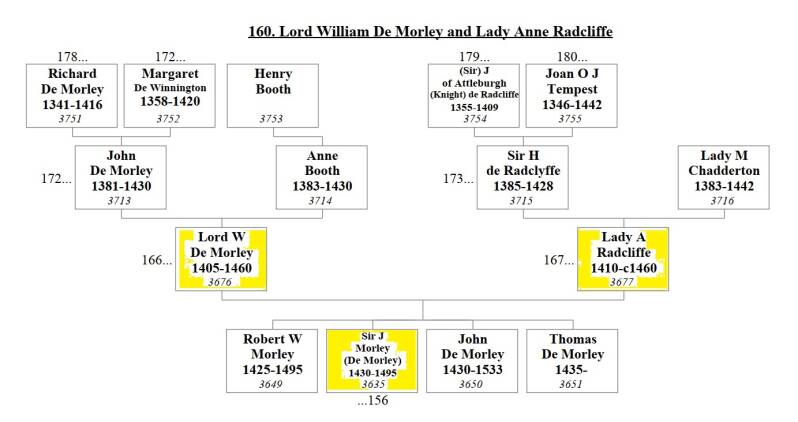
Ivo Fitzrichard Deroumare de Taillebois (Tailbois)
Ivo de Taillebois was born in 1036, in Cristot, Calvados, Normandy, France. His father was Geoffrey II, de Château-Landon the Count of Gâtinais, and his mother was Ermengarde Comtesse d'Anjou.
Known as "Baron of Kendal", the brother of the Earl of Anjou, he arrived in England in 1066 with William of Normandy. He did well from the invasion, gaining parts of Lancashire, Westmorland and also Lincolnshire. He became Sheriff of that County two years after the invasion and featured as an extensive landowner. He married a Saxon Noblewoman, Lucy, Countess of Chester, sister of the earls Edwin of Mercia and Morcar of Northumbria, and the daughter of Earl Aelfgar, who was the son of Godifu "Lady Godiva"(possibly his 3rd marriage). Lands in Kendal would have come to him through his marriage, but it is also evident that he was given lands by William Rufus.
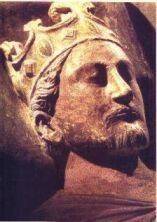
Their son Aelfred de Taillebois was known as "The Englishman". 2nd Baron of Kendal. He married Edgitha of Northumberland, daughter of Gofpatrick, Earl of Northumbria, and Aetheldreda, Princess of England.
Their son Gilbert De Frunesco de Tailbois married Goditha Fitzreinfride, and their son was Nicholas Fitz-Gilbert de Tailbois (de Radcliffe). Nicholas was a knight who was given the Manor of Radeclive from his lord, and may have built Radcliffe Tower, in the village of Radcliffe in Lancashire, England. Nicholas took the name "de Radcliffe" meaning of or from Radcliffe (literally red cliffs after the location). Eventually the last name Tailbois was dropped, and Radcliffe took its place in the family lineage.
As far as I can tell (and these things are by no means clear), Ivo de Taillebois was my direct ancestor on my mother’s side, some 30 generations ago. Tracing my lineage back to the Norman invasion on both sides of my family would again help explain why so much of my DNA seems to originate from western Europe.
William de Radclyffe, eldest son of Richard and Isabella, succeeded his father sometime after 1375. There isn't much mention of this William in the records. He married Susanah, younger daughter of Robert de Legh of Adlington and his wife Maud de Norleigh. Susanah was sister to Matilda, second wife of William Todmorden. One of her brothers was Sir Robert de Legh, High Sheriff of Cheshire from 1393 until 1398, and a second brother was Sir Piers de Legh, who married Margaret d'Anyers, widow of John de Radclyffe or Ordsall. William was not in possession of the family estates for long. He was dead by 1390, when his son James succeeded him.
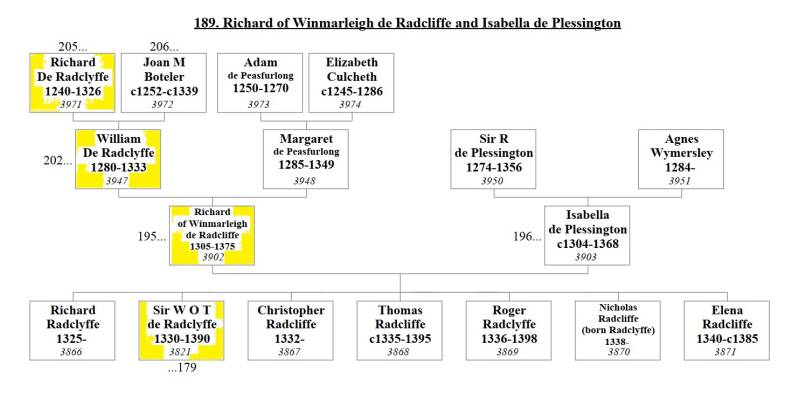
William’s Father: Richard de Radcliffe, of Winmarleigh
- Born: 1305 Radcliffe Tower, Lancastershire, England
- Died: 1375 (at age ~70) Radcliffe Tower, Bury, Lancashire, England
William’s Mother: Isabella de Radclyffe (born de Plessington)
My direct ancestor (21 generations)
- Born: Circa 1304 Wymersley, Lancashire, England
- Died: 1368 (at age ~64) Radcliffe, Bury, Lancashire, England
(Interestingly, this is where the database stops reporting a direct ancestor relationship, despite the reasonably well established family tree above this point).
Richard’s Father: William (The Great) De Radclyffe
- Born: 1280 Radclyffe Tower Lancashire England
- Died: 1333 (at age ~53) Edgeworth, Bolton, Lancashire, England
Richard’s Mother: Margaret De Radclyffe (born de Peasfurlong)
- Born: 1285 Peasfurlong, Warrington, Cheshire, England
- Died: 1349 (at age ~64) Bolton, Lancashire, England
William (the Great)’s Father: Richard De Radclyffe
- Born: 1240 Radclyffe Tower Lancashire England
- Died: 1326 (at age ~86) Radcliffe Tower, Radcliffe, Lancashire, England
Mother: Joan Margaret De Radclyffe (born Boteler)
- Born: Circa 1252 Bewsey Hall, Warrington, Lancashrie, England
- Died: Circa 1339 (at age ~87) Radcliffe, Lancashire, England
He was a gallant soldier of the Scottish wars and was given many honors by King Edward I. Shortly after entering his inheritance, he recovered the lands of Tottington by a writ of novel disseizin. At a Privy Council held at Stirling on 12 Jul 1291, to Richard a grant was taken across the causeway of Blakesteynegge to be used to repair said causeway. Later Richard received the appointment of Seneschal and Minister of the King's Forests of Blackburnshire.
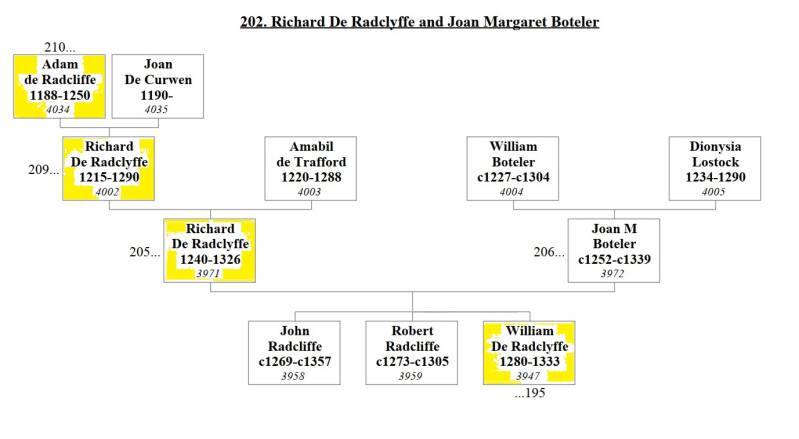
Richard’s Father: Richard (Robert) De Radclyffe
- Born: 1215 Radcliffe Tower, Lancashire, England
- Died: 1290 (at age ~75)
Mother: Amabil Radcliffe (born de Trafford)
- Born: 1220 Trafford, Greater Manchester, England
- Died: 1288 (at age ~68) Radcliffe Tower, Radcliffe, Lancashire, England.
Heir of his father, succeeded to Oswaldtwistle, Hartshead, and Tottington in addition to the capital manor. The Tottington lands were later seized by Henry de Lacy, Earl of Lincoln, as part of the Montbegon fee when the Montbegon lands were alienated at death of Sir Robert de Montbegon.
Richard (Robert)’s Father: Adam de Radcliffe
- Born: Dec 15 1188 Radcliffe Towers, Radcliffe, Lancashire, England
- Died: 1250 (at age ~62) Radcliffe Towers, Radcliffe, Lancashire, England.
Mother: Joan Radcliffe (born De Curwen)
- Born: 1190 Workington, Coupland, England
- Died: Workington
His wife was a relative, she was the daughter of Alan, who was a descendant of Gospatric, Earl of Northumberland, the Barons of Kendal, and the Lords of Lancaster. He was a member of the jury at Lancaster Assizes in 1248.
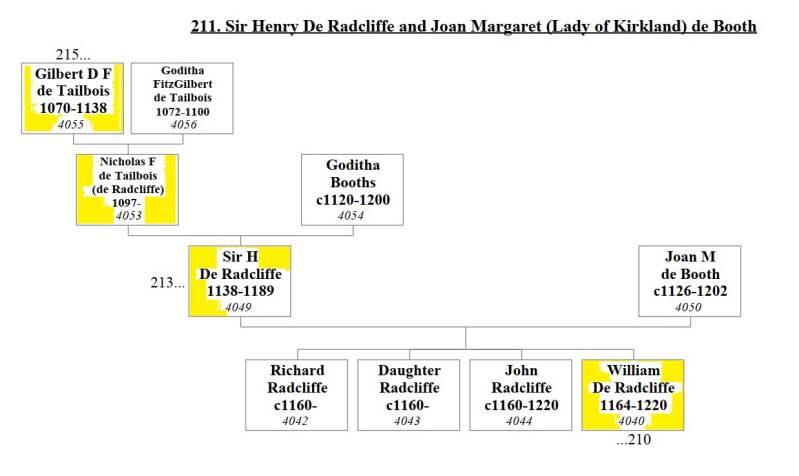
Adam’s Father: William De Radcliffe
- Born: 1164 Radcliffe Tower, Bury, Lancashire, England
- Died: 1220 (at age ~56) Radcliffe Tower, Lancashire, England
Mother: Cecilia Baroness Montbegon De Radcliffe (born De Montbegon)
- Born: 1165 Hornby Castle, Lancaster, Lancashire, England
- Died: 1225 (at age ~60) Radcliffe Tower, Bury, Lancashire, England
Made High Sheriff of Lancaster in 1194 by Richard the Lionhearted he was one of twelve trust knights of the shire. The Montbegons had vast holdings from the Conqueror and on the creation of the Honour of Lancaster by Henry I they were ceded further lands. In 1149, when Stephen temporarily resigned to the Earl of Chester his lands between Ribble and Mersey, the Montbegon holdings were exempt from the grant in a desire to retain the favor of this most powerful baron. Several years after the death of Lady Cecilia, William remarried to Eugenia, who was the daughter of Alexander, who was the son of Uvieth. In 1221, a year after William died, Eugenia sued William's son Adam Radcliffe, for her dower in a third part of Redclyffe, Edgeworth, and Little Lever including lands in Entwistle and Quarlton. Jordan De Quickenlos dispossessed Eugenia and held the estate until 1246 when she recovered it upon his failure to appear in answer to a suit since the boundaries of these lands had been subject to continuous dispute.
(The records start getting a bit sparce and contradictory from here on up)
William’s Father: Henry De Radcliffe
- Born: Circa 1112 Lancashire, England
- Died: Before 1190 Radcliffe Tower, Lancashire, England.
Mother: Unknown De Radcliffe (born de Booth)
- Born: 1126 Lancashire, England
- Died: Circa 1205 (at age ~79) Bury, Lancashire, England
Henry’s Father: Nicholas Fitz-Gilbert de Tailbois (de Radcliffe)
- Born: 1097
- Deceased
Mother: Unknown De Radclyffe (born Saxon of The Booths)
- Deceased
Note: some records have Nicholas as being Ivo's son. A knight who was given the Manor of Radeclive from his lord, and may have built Radcliffe Tower, in the village of Radcliffe in Lancashire, England. Nicholas took the name "de Radcliffe" meaning of or from Radcliffe. Eventually the last name Tailbois was dropped and Radcliffe took its place in the family lineage.
Nicholas’s Father: Gilbert De Frunesco de Tailbois
- Born: 1070 Lancashire, England
- Died: 1138 (at age ~68) Furness, Lancashire, England
Mother: Goditha FitzGilbert de Tailbois
- Born:1072 Lancaster, Lancashire, England
- Died: 1100 (at age ~28) Y, Somme, Picardie, France
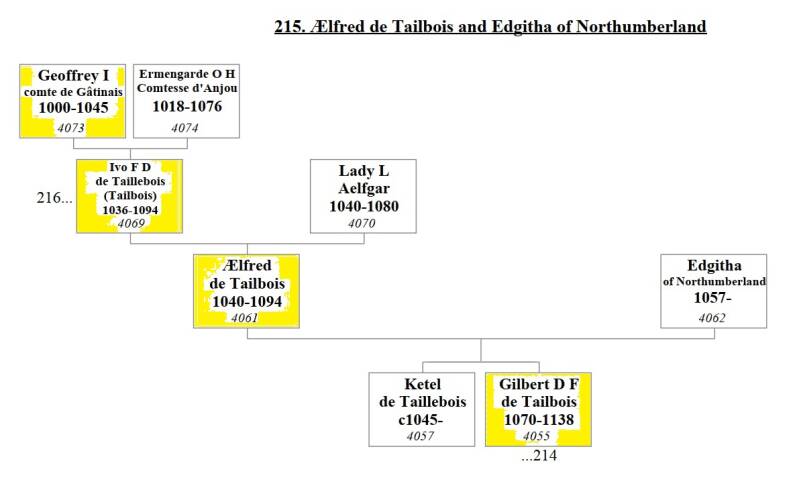
Gilbert’s Father: Ælfred de Tailbois
- Born: 1040 Anjou, Isere, Rhone-Alpes, France
- Died: 1094 (at age ~54) Kendal, Cambria, England
Notes: known as "The Englishman". 2nd Baron of Kendal.
Mother: Edgitha de Frunesco de Tailbois (born of Northumberland)
- Born: 1057 Mercia, Essex
- Deceased
Edgitha of Northumberland (daughter of Gofpatrick, Earl of Northumbria, and Aetheldreda, Princess of England), Mercia, England.
Ælfred’ s Father: Ivo Fitzrichard Deroumare de Taillebois (Tailbois)
- Born: 1036 Cristot, Calvados, Normandy, France
- Died: 1094 (at age ~58) Kendal, Cambria, England
Notes: Known as "Baron of Kendal", the brother of the Earl of Anjou. He went to England in 1066. his wife Lucia was the daughter of Earl Aelfgar, who was the son of Godifu "Lady Godiva".
Ivo de Taillebois arrived in England in 1066 with William of Normandy. Accounts are not clear cut as to who his parents were, Fulk of Anjou is a possible contender for the title. There is also a suggestion that like William, Ivo may have been illegitimate.
Many of the records related to Ivo are vague or lost. But one thing is clear. He did well from the invasion. He gained parts of Lancashire, Westmorland and also Lincolnshire. He became Sheriff of that County two years after the invasion and features as an extensive landowner in the Domesday Book. There is some debate as to how Ivo acquired Kendal or Kendale, which later became a barony. The Strickland sisters say that he married a Saxon Noblewoman, Lucy, Countess of Chester, sister of the earls Edwin of Mercia and Morcar of Northumbria. Lands in Kendal would have come to him through his marriage but it is also evident that he was given lands by William Rufus. It is certain that he gave the church in Kendale to St Mary’s Abbey in York. It should also be added that the Scots were only driven out of Cumbria in 1092 – so Kendal was no sinecure. The remains of his motte and bailey castle can be viewed at Castle Howe, the stone castle is from a later period.
But back to Lucy. She held lands in and around Spalding. This may have been part of the reason, along with his role as King’s man, that Ivo found himself in Ely taking up arms against Hereward the Wake in 1071. Lucy’s brothers were also caught up in the rebellion against the conqueror – making their lands forfeit- so Ivo seems to have done quite well out of it all. No one seems to have recorded what Lucy thought of all this or the fact that she appears to have been married not once, not twice but thrice (her third husband being Ranulf le Meschin) dying in 1131. One thing is clear though Lucy has disappeared into history leaving some very fragmentary and tantalizing historical evidence behind her.
In addition to Kendal, Ivo was also overlord of Furness. The man’s family tree is complicated. Evidence suggested that he may have been married twice before marrying Lucy. Other evidence taken from Ingulph de Croydon- the Croyland Chronicle- and reproduced in Some Records of Two Lakeland Towns by Brydson paints an unappealing picture of Kendal’s first Norman lord:
“All the people in his domains were very careful to appear humble before Taillebois, and never to address him without bending one knee to the earth, but though they were anxious to render him all homage, he made no return of goodwill. On the contrary he vexed, tormented, and imprisoned them, and loaded them with daily cruelties ; his truly diabolical spirit loved evil for evil’s sake. He would often set his dogs to pursue other men’s cattle, would scatter the animals far and wide, drown them in the lakes, maim them in various ways, and make them unfit for service by breaking their limbs or backs. Ivo was not only absolved, but praised for all he had done in extortion, pillage, and murder.”
Sounds charming! And he was a forebear of Katherine Parr, Henry VIII’s sixth queen and also of George Washington.
Mother: Lady Lucia de Tailbois (born Aelfgar)
- Born: Sep 27 1040 Spalding Castle, Lincolnshire, England
- Died: 1080 (at age ~40) Spalding Castle, Lincolnshire, England
Earl of Holland, Sheriff of Lincoln, 1st Baron of Kendal (Baroness Kendal). Daughter of Earl Aelfgar and grandaughter of Gruffydd, King of Wales.
Ivo’s Father: Geoffrey II (Ferreol) comte de Gâtinais
- Born: 1000
- Died: Apr 30 1046 (at age ~46) Château-Landon, Seine-et-Marne,
Geoffrey II, de Château-Landon was the Count of Gâtinais. He was the son of Hugues du Perche, Count of Gâtinais, by Béatrice de Mâcon, the daughter of Aubry II de Mâcon. About 1035 he married Ermengarde of Anjou, Duchess of Burgundy, daughter of Fulk III, Count of Anjou.
AKA: Geoffrey (Geoffrey II) "Ferréol, Hammer, Seigneur de Château-Landon, Comte de Gâtinais" de Château-Landon
Mother: Ermengarde Comtesse d'Anjou
- Born:1018 Angers
- Died: Mar 18 1076 (at age ~58) Cause: Murder at the Church of Fleurey-sur-Ouche, three days before her 58th birthday. (Sounds like there is an interesting story there, too!)
Also known as Blanche, she was a Duchess consort of Burgundy. She was the daughter of Count Fuljouk III of An and Hildegarde of Sundgau. She was sometimes known as Ermengarde-Blanche.
Lady Godiva
We can’t really leave the Morley/Radcliffe stories without a nod to ‘Lady G’, however tenuous the family connection is. It was Ivo de Taillebois, who came over to England in 1066 with William of Normandy, and who married a Saxon Noblewoman, Lucy, Countess of Chester, the daughter of Earl Aelfgar, who was the son of Godifu "Lady Godiva". Ivo de Taillebois was (probably) my direct ancestor on my mother’s side, some 30 generations ago.
In Old English Godgifu, was a late Anglo-Saxon noblewoman who is relatively well documented as the wife of Leofric, Earl of Mercia, and a patron of various churches and monasteries.
She is mainly remembered for a legend dating back to at least the 13th century, in which she rode naked – covered only by her long hair – through the streets of Coventry to gain a remission of the oppressive taxation that her husband, Leofric, imposed on his tenants. The name "Peeping Tom" for a voyeur originates from later versions of this legend, in which a man named Thomas watched her ride and was struck blind or dead.
Historical figure
Godiva was the wife of Leofric, Earl of Mercia. They had nine children; one son was Ælfgar. Godiva's name occurs in charters and the Domesday survey, though the spelling varies. The Old English name Godgifu or Godgyfu meant "gift of God"; 'Godiva' was the name's Latinised form. Since the name was a popular one, there are contemporaries of the same name.
It is claimed that Godiva was born in Bucknall, Lincolnshire around 995 AD; however, several historians have declared the charter document used as evidence for this to be spurious.
A woman named Godiva was recorded in the 12th-century history (called "Liber Eliensis") of Ely Abbey. If that "Godiva" were the same person as 'Lady Godiva', then she would have been a widow when Leofric married her. Both Leofric and Godiva were generous benefactors to religious houses. In 1043, Leofric founded and endowed a Benedictine monastery at Coventry on the site of a nunnery destroyed by the Danes in 1016. Writing in the 13th century, Roger of Wendover credits Godiva as the persuasive force behind this act of generosity. In the 1050s, her name is coupled with that of her husband on a grant of land to the monastery of St. Mary, Worcester, and the endowment of the minster at Stow St Mary, Lincolnshire. She and her husband are commemorated as benefactors of other monasteries at Leominster, Chester, Much Wenlock, and Evesham. She gave Coventry a number of works in precious metal by the famous goldsmith Mannig and bequeathed a necklace valued at 100 marks of silver. Another necklace went to Evesham, to be hung around the figure of the Virgin Mary accompanying the life-size gold and silver rood she and her husband had donated, and St Paul's Cathedral in the City of London received a gold-fringed chasuble. Both Godiva and her husband were among the most munificent of the several large Anglo-Saxon donors of the last decades before the Norman Conquest; the early Norman bishops made short work of their gifts, carrying them off to Normandy or melting them down for bullion. Nevertheless, the memory of Godiva and Leofric survived during the Norman reign and in 1122 their names were commemorated in the mortuary roll of Saint Vitalis of Savigny.
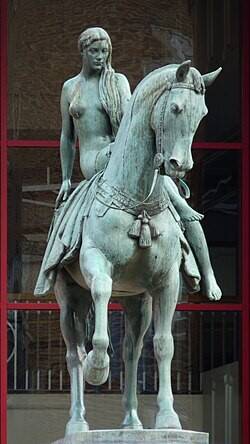
Lady Godiva, a statue by Sir William Reid Dick unveiled in 1949 in Broadgate, Coventry, a £20,000 gift from W. H. Bassett-Green, a Coventrian.
19th-century equestrian statue of the legendary ride, by John Thomas, Maidstone Museum, Kent
The manor of Woolhope in Herefordshire, along with four others, was given to the cathedral at Hereford before the Norman Conquest by the benefactresses Wulviva and Godiva—usually held to be the Godiva of legend and her sister. The church there has a 20th-century stained glass window representing them.
Her signature, Ego Godiva Comitissa diu istud desideravi ("I, The Countess Godiva, have desired this for a long time"), appears on a charter purportedly given by Thorold of Bucknall to the Benedictine monastery of Spalding. However, this charter is considered spurious by many historians. Even so, it is possible that Thorold, who appears in the Domesday Book as sheriff of Lincolnshire, was her brother.
After Leofric's death in 1057, his widow lived on until her mid-fifties and died sometime between the Norman Conquest of 1066 and 1086. She is mentioned in the Domesday Book as one of the few Anglo-Saxons and the only woman to remain a major landholder shortly after the conquest. By the time of this great survey in 1086, Godiva had died and her former lands are listed as held by others.
The place where Godiva was buried has been a matter of debate. According to the Chronicon Abbatiae de Evesham, or Evesham Chronicle, she was buried at the Church of the Blessed Trinity at Evesham, which is no longer standing. According to the account in the Oxford Dictionary of National Biography, "There is no reason to doubt that she was buried with her husband at Coventry, despite the assertion of the Evesham chronicle that she lay in Holy Trinity, Evesham." Her husband was buried in St Mary's Priory and Cathedral in 1057.
According to William of Malmesbury's Gesta pontificum anglorum, Godiva directed in her will that a "circlet of precious stones which she had threaded on a cord in order that by fingering them one after another she might count her prayers exactly, were to be placed on a statue of the Blessed Virgin Mary," the oldest known textual reference to the use of a Rosary-like string of prayer-beads.
William Dugdale (1656) stated that a window with representations of Leofric and Godiva was placed in Trinity Church, Coventry, about the time of Richard II.
Legend
The legend of the nude ride is first recorded in the 13th century, in the Flores Historiarum and the adaptation of it by Roger of Wendover. Despite its considerable age, it is not regarded as plausible by modern historians, nor is it mentioned in the two centuries after Godiva's death, whereas her generous donations to the church receive various mentions.
According to the typical version of the story, Lady Godiva took pity on the people of Coventry, who were suffering grievously under her husband's oppressive taxation. Lady Godiva appealed again and again to her husband, who obstinately refused to lower the taxes. At last, weary of her repeated requests, he said he would grant her request if she would strip naked and ride on a horse through the streets of the town. Lady Godiva took him at his word, and after issuing a proclamation that all persons should stay indoors and shut their windows, she rode through the town, clothed only in her long hair. Just one person in the town, a tailor ever afterwards known as 'Peeping Tom', disobeyed her proclamation in what is the most famous instance of voyeurism. In most versions of the story, Tom is struck blind or dead for his transgression.
Some historians have discerned elements of pagan fertility rituals in the Godiva story, whereby a young "May Queen" was led to the sacred Cofa's tree, perhaps to celebrate the renewal of spring.
A modified version of the story was given by printer Richard Grafton, later elected MP for Coventry. According to his Chronicle of England (1569), "Leofricus" had already exempted the people of Coventry from "any maner of Tolle, Except onely of Horses", so that Godiva ("Godina" in text) had agreed to the naked ride just to win relief for this horse tax. And as a condition, she required the officials of Coventry to forbid the populace "upon a great pain" from watching her, and to shut themselves in and shutter all windows on the day of her ride. Grafton was an ardent Protestant and sanitized the earlier story.
Peeping Tom
The story of Peeping Tom, who alone among the townsfolk spied on the Lady Godiva's naked ride, probably did not originate in literature, but came about through popular lore in the locality of Coventry. Reference by 17th century chroniclers has been claimed, but all the published accounts are 18th century or later.
Degree of nudity
While most iterations of the legend describe Godiva riding completely nude, there is much dispute as to the historical authenticity of this notion.
A more plausible rationale for the legend includes one based on the custom at the time for penitents to make a public procession in their shift, a sleeveless white garment similar to a modern slip and one which was certainly considered "underwear" in Godiva's time. If this were the case, Godiva might have actually travelled through town as a penitent in her shift, likely unshod and stripped of her jewellery which was the hallmark of her upper-class rank. It would have been highly unusual to see a noblewoman present herself publicly in such an unadorned state, possibly bringing about the legend which would later be romanticised in folk history. Her 'naked' ride has also been considered to provide an insight into how women used their sensuality and bodies to wield power in twelfth century England, as well as how her protest formed Coventry's civic identity.
Some suggest that the nudity myth originated in Puritan propaganda, designed to blacken the reputation of the notably pious Lady Godiva. Chroniclers of the 11th and 12th centuries mention Godiva as a respectable religious woman of some beauty and do not allude to nude excursions in public.[42] It has also been argued that the story was made up about the pious Lady Godiva in order to attract pilgrims, and therefore, revenue, to Coventry.
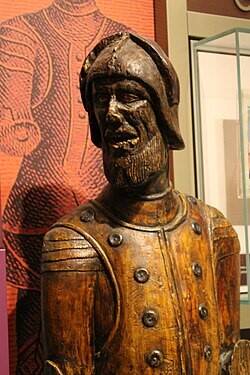
A replica of a medieval sculpture of Peeping Tom, on display at Herbert Art Gallery and Museum