

Sims and Watson ancestral stories
Explore the rich history of the Sims and Watson families, delving into their early records and fascinating stories. This page is dedicated to sharing the discoveries made about my father's paternal lines, offering insights and connections for all family members and those with a shared interest.

Tracing the Watson family roots
This section explores the initial records and early history of the Watson family. Uncover the foundational stories and significant events that shaped this paternal line. Our research aims to paint a vivid picture of their lives, providing valuable insights into their past.
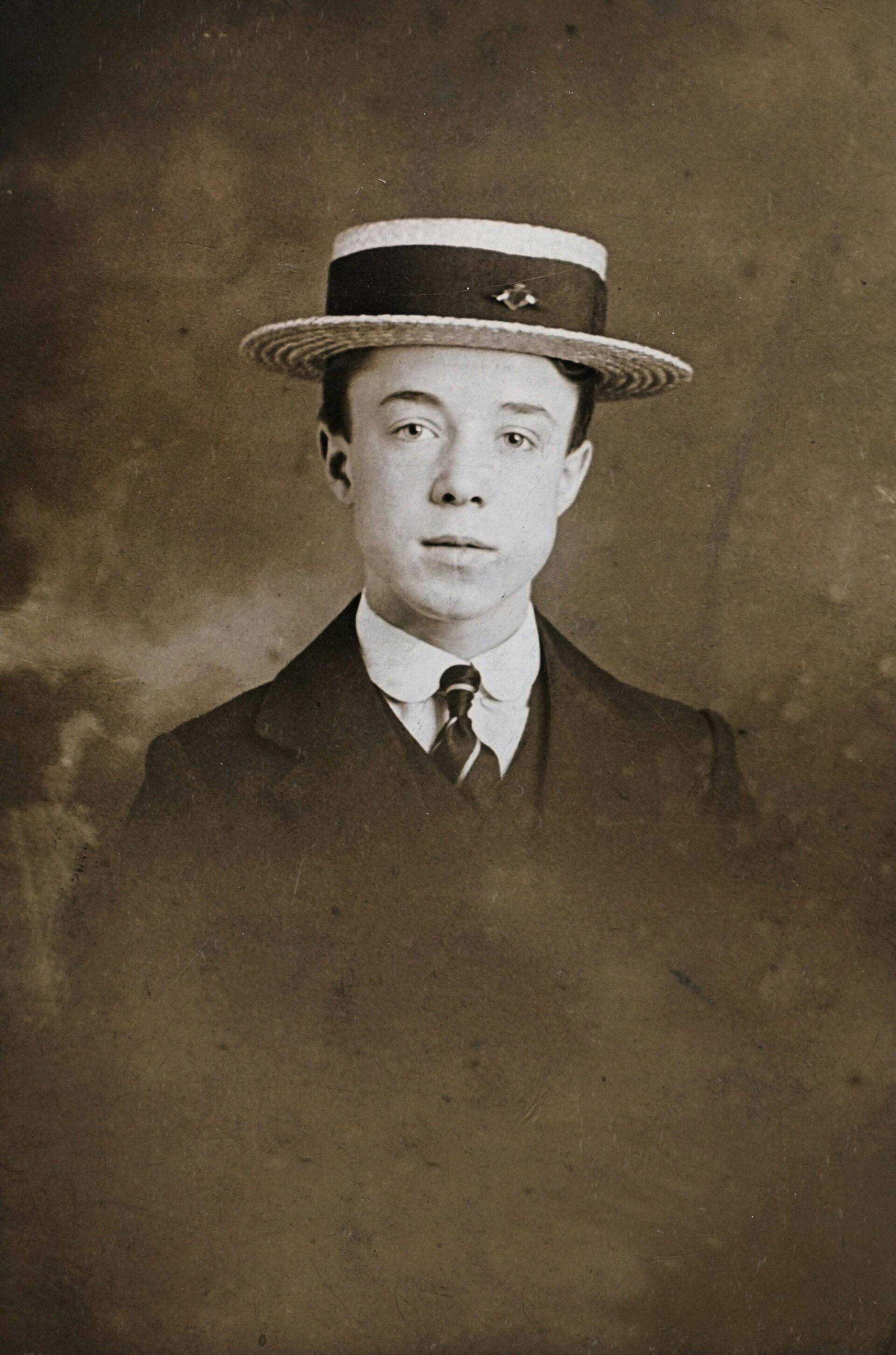
The Sims family journey
Delve into the fascinating journey of the Sims family, another crucial paternal line in our history. Here, you'll find detailed research and compelling narratives about their origins and early experiences. Discover how their lives intertwined with the broader history of our family.

Sharing our findings
This page serves as a dedicated platform to share all research findings and ancestral stories related to the Sims and Watson families. Our goal is to connect with family members and anyone else interested in these historical narratives. We hope you find these discoveries both informative and engaging.
What’s in a Name?
Watson
I can trace the Watson line back 7 generations to David Watson, who was born in Glasgow in 1734. He married Euphemia Lawson, who was born circa 1738 in the same city. Together, David and Euphemia had three children: James, born in May 1766; Cathrin, born on June 16, 1767; and John, born on June 27, 1768.
When David was born, the Industrial Revolution was beginning to take shape, with Glasgow emerging as a significant center for trade and manufacturing. This period saw an influx of people moving from rural areas to urban centers in search of work, leading to population growth and economic transformation.
When he married Euphemia Lawson around the late 1750s, Scotland was experiencing social changes influenced by the Enlightenment. Intellectual movements were fostering new ideas about governance, science, and human rights. Their marriage coincided with a growing emphasis on family life and domesticity, reflecting broader societal values of the time.
During the years surrounding the births of their children, Scotland was also undergoing cultural shifts. The Scottish Enlightenment was at its peak, producing influential thinkers like Adam Smith and David Hume. These intellectual advancements would have permeated everyday life, affecting education and social structures within families like the Watsons'.
As the Watson family grew, they lived through a transformative era characterized by the rise of industrialization. Glasgow became known for shipbuilding and textile production, contributing to a burgeoning economy. However, this rapid development also brought challenges such as labour exploitation and poor living conditions for many working-class families, highlighting the stark contrasts between wealth and poverty.
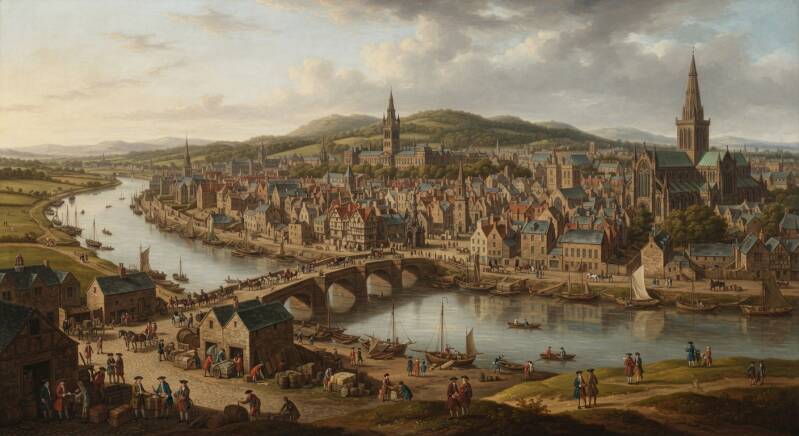
Glasgow in the 1730’s
Derived from the name Walter, the name arrived in Scotland as a high-status import following the Norman Conquest of England in 1066. While it sounds common today, in the 12th and 13th centuries, it was a "power name" associated with the ruling elite and the reorganization of Scottish society.
The High Steward of Scotland
The most significant reason for the name's spread was the rise of the House of Stewart. The very first High Steward of Scotland was a noble named Walter fitz Alan (1106–1177). Because he held one of the most powerful positions in the kingdom, his name became a symbol of loyalty, status, and proximity to the crown.
The Norman "Trend"
After the Norman Conquest, many French-speaking knights moved north to Scotland at the invitation of Scottish kings like David I. These nobles brought Germanic names filtered through Old French, such as:
- Walter (from the Germanic Waldhari, meaning "ruler of the army")
- Robert
- William
As these families became the new landlords, the local population began adopting these names—either out of admiration, to honour a local lord, or because the names were easier for the new administration to record.
From Walter to "Wat"
In the Scots language and Middle English, long names were almost always shortened for daily use. "Walter" was a mouthful for everyday folk, so it shortened to Wat. By the 1700s, when surnames became fixed, the descendants of these many "Wats" became the Watsons we see in the Glasgow records.
Let’s look closer at how this name moved from the "High Stewards" down to the everyday people of Glasgow.
The rise of the name "Walter" in Scotland is essentially the story of a "corporate promotion" that ended in a royal takeover. It wasn't just a popular name; it was the name of the family that shaped the Scottish state.
From Knight to King
When Walter fitz Alan was appointed the first High Steward of Scotland, the title "Steward" was a job description (the manager of the royal household). However, his descendants were so successful that the job title eventually became the family’s surname: Stewart.
The leap to the throne happened through a strategic marriage. Walter Stewart (the 6th High Steward) married Marjorie Bruce, the daughter of King Robert the Bruce. When the Bruce line failed to produce a male heir, the crown passed to their son, Robert II, the first Stewart King.
Why "Walter" Stuck
Because the Stewarts were the dominant royal house for centuries, the name Walter gained a "halo effect" across the country:
- Royal Branding: Naming a child Walter in the 1300s–1500s was a way to signal loyalty to the Stewart crown.
- The Power of Diminutives: Just as "Charles" leads to "Charlie," "Walter" led to "Wat." Because the name was so ubiquitous in the royal courts and the Lowland estates, "Wat" became one of the most common nicknames in the region.
- The Lowland Presence: Unlike some Highland names that stayed locked in the north, the Stewart influence was centered in the Lowlands (Renfrewshire and the Glasgow area), which is exactly where the Watson surname eventually exploded in popularity.
The Transition to "Watson"
By the 1700s, the "Walter" craze had trickled down from the kings to the commoners. As Glasgow's population grew, people needed a way to distinguish one "Wat" from another. The son of a man named Wat became "Wat’s son," which the scribes of Glasgow's burgeoning trade industry quickly standardized as Watson.
The name Calder joins the Watson line when John Watson (born 1768) married Agnes Calder in Glasgow on the 16th of October 1785.
I can trace the Calder family in my family tree back to Sir Thomas Calder (2nd Baronet of Muirton), who was born in Muirton, Kinloss, Morayshire, Scotland on the 6th of June, 1682.
The Barony of Muirton is near Forres along the Findhorn River in Moray. Originally, it included Kinloss Abbey and its lands, and the burgh of barony of Findhorn.
Kinloss Abbey
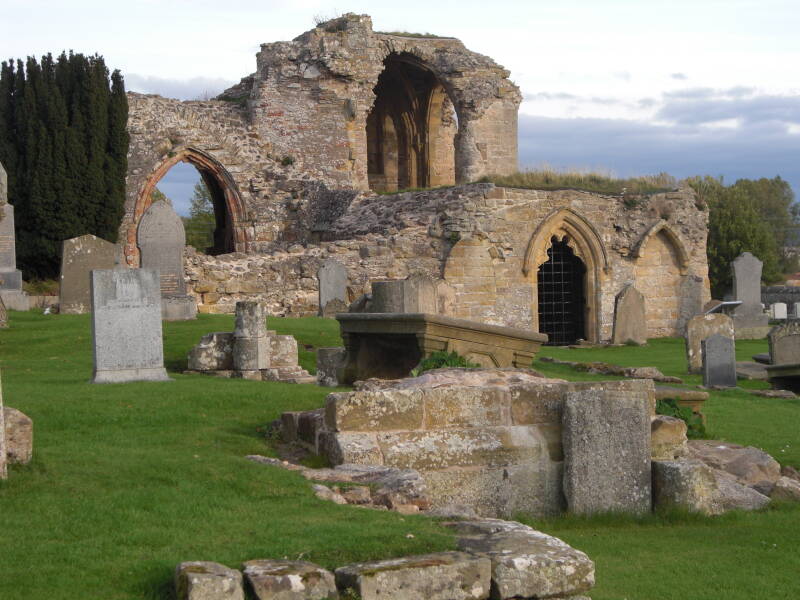
Sir Thomas Calder, 2nd Baronet of Muirton (1682–1760), was a Scottish nobleman and the head of a prominent Morayshire family branch. He held a title in the Baronetage of Nova Scotia, a class of hereditary titles created by the British Crown in the 17th century, though the Calders of Muirton remained rooted in Scotland.
Genealogical Record
His family records and immediate family connections are as follows:
- Birth: June 6, 1682, in Kinloss, Moray, Scotland.
- Death: January 29, 1760 (aged 77) in Edinburgh, Scotland.
- Parents: He was the son of Sir James Calder, 1st Baronet of Muirton (1657–1711), and Grizzel (or Grizel) Innes (1654–1742).
- Marriage: He married Christian Scott (1688–1743) in 1707 in Rafford, Elginshire.
- Siblings: His brothers and sisters included Margaret Calder, John Calder, Elizabeth Calder, and William Calder.
- Heir: Upon his death in 1760, his title passed to his eldest surviving son, Sir James Calder, 3rd Baronet of Muirton (1712–1774).
The Baronetcy of Muirton
The Calders of Muirton were a branch of the wider Scottish Clan Calder, historically associated with the Thanes of Cawdor in the Scottish Highlands. The Muirton baronetcy was first created on November 5, 1686, for Thomas's father, Sir James Calder.
Sir Thomas inherited the title upon his father's death in 1711. Through his son James (the 3rd Baronet), Sir Thomas became the grandfather of several notable figures, including Major General Sir Henry Calder (4th Baronet) and Admiral Sir Robert Calder, a distinguished Royal Navy officer who served during the Napoleonic Wars.
The surname Calder is a venerable name with deep roots in the Scottish Highlands, carrying both a strong geographical connection and a touch of ancient mystery. It is primarily a topographic name, meaning it was originally given to people living near a specific natural feature—in this case, a river.
Etymology and Derivation
The name is derived from the Old Brittonic or Pictish words for "rough water" or "stony river." Linguists generally trace it back to two elements:
- "Cal": Meaning "hard" or "stony."
- "Dour" (or "dwfr"): An ancient Celtic word for "water."
Together, these form Calldubh or Calder, describing the turbulent, rocky rivers found throughout Scotland. There are several rivers with this name across the country, most notably in Renfrewshire, Inverness-shire, and West Lothian.
Historical Origins
The history of the name is intertwined with the Thanes of Cawdor (Calder) in Nairnshire.
- The MacCalder Clan: The Calders were once a powerful clan in their own right. The Thanes of Cawdor held their lands from the 12th century, famously mentioned in Shakespeare’s Macbeth (though the historical Macbeth’s connection to the title is a literary invention).
- The Campbell Transition: In the late 15th century, the "Calder" line was absorbed into the Clan Campbell through the marriage of Muriel, the heiress of the Thanes of Calder, to Sir John Campbell. This led to the creation of the Campbell of Cawdor branch, though many families retained the original Calder surname.
Geographical Variants
While its heart is in Scotland, the name appeared in northern England as well, likely brought south by migrating families or evolving independently from similar Celtic river names in Lancashire and Yorkshire.
- Scotland: Focused in Nairn and the Northeast.
- England: Often associated with the Calder Valley in West Yorkshire.
Heraldry and Symbols
The traditional coat of arms associated with the name Calder often features a buck's head (a stag), symbolizing strength and pace, or a hart’s head. The family motto is often cited as:
"Vigilans et Audax" (Watchful and Bold)
Notable Figures
Throughout history, the name has been carried by influential figures across various fields:
- Alexander Calder: The famous 20th-century American sculptor known for inventing the "mobile."
- Sir Robert Calder: A British Admiral during the Napoleonic Wars.
The Kincaid’s join the Watson line the generation after the Calder’s, when John and Agnes son William married Janet Kincaid in Glasgow on September 5th, 1825. She was the daughter of David Kincaid and Janet MacNair, and was born in Linlithgow, Linlithgow Parish, West Lothian, Scotland on the 24th of September 1805.
I have traced the Kincaid’s in my family tree back as far as James Kincaid IV (also styled as James Kincaid V of that Ilk, or "Laird of Lennox Castle") was a 17th-century Scottish laird whose lineage connects heavily to the historical parish of Campsie in Stirlingshire, Scotland. As a minor noble, his life reflects the era of Scottish lairds managing ancestral estates in the turbulent 1600s, right before many branches of prominent Scottish families began migrating to the Americas.
Genealogical Profile
The Kincaid family (Clan Kincaid) traces its roots back to the 13th century in Stirlingshire. James IV inherited the title and the lands, acting as the head of his branch of the family.
Titles
4th (or 5th) Laird of Kincaid; Laird of Lennox Castle
Parents
James Kincaid III and Margaret Hamilton
Spouse
Marion Boyd (daughter of John Boyd of Trochrig)
Birth
c. 1635 in Campsie, Stirlingshire, Scotland
Death
c. 1700 in Kincaid, Stirlingshire, Scotland
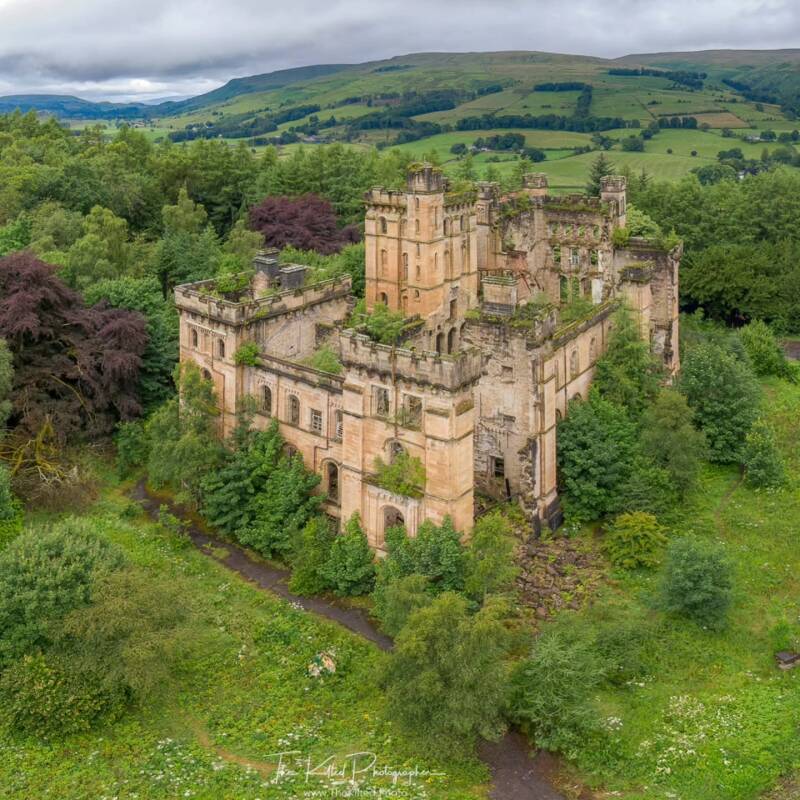
Lennox Castle
Descendants and Legacy
James Kincaid IV and Marion Boyd had a large family, which was common for the era to ensure the continuation of the family line and estate management. Their marriage produced several notable children, many of whom have descendants living today:
- Alexander "The Pharmacist" Kincaid (b. 1670)
- James Kincaid VI (b. 1673)
- John Kincaid (b. 1674)
- William Kincaid (b. 1674)
- David Kincaid (b. 1683)
- Samuel Kincaid (b. 1687)
- Joseph Kincaid (b. 1688)
- Jean, Marion, and Margaret Kincaid
Following James's death in 1700, the family endured the political upheavals of the 18th century. Because the Kincaid’s had ties to the Stuarts, the ensuing Jacobite rebellions (particularly in 1715) heavily impacted the family. As a result, several of James Kincaid IV's immediate descendants were obliged to leave Scotland, settling in places like Lancaster County, Pennsylvania, and Spotsylvania County, Virginia.
Key Milestones
Birth 1635
James is born in the Parish of Campsie, Stirlingshire, to James Kincaid III and Margaret Hamilton.
Marriage Contract Dec 4, 1674
A formal marriage contract is made at Kilmarnock between James and Marion Boyd, securing her a sum from the lands of "Mekle and Little Kincaid, and Kinkell."
Birth of Alexander 1670-1679
The birth of his heir and other primary children, expanding the family line at their ancestral seat.
Death 1700
James dies at roughly 65 years old in Stirlingshire, passing the estate titles to his heirs shortly before the family's eventual dispersal.
The surname Kincaid (and its variants like Kinkead or Kinkaid) is a classic Scottish territorial name with deep roots in the Stirlingshire region. It is derived from the lands of Kincaid, which have been associated with a specific family line for over seven centuries.
Etymology and Derivation
The name is Goidelic in origin, coming from the Scottish Gaelic Ceann-cadha. The breakdown of the name is generally accepted as follows:
- Ceann: Meaning "head," "end," or "top."
- Cadha: Meaning a "pass," "steep path," or "narrow valley."
When combined, the name translates to "The Head of the Pass" or "Top of the Steep Path." This describes the geographical location of the family’s ancestral estate in the parish of Campsie, situated at a strategic high point overlooking the surrounding glens.
Historical Origins
The Kincaids are recognized as a "landed" family rather than a massive highland clan, though they held significant local power.
Early Records: The first recorded mention of the name appears in a charter from the reign of King Alexander II (1214–1249).
The Ragman Rolls: In 1296, a Kincaid of that Ilk is noted for having sworn fealty to King Edward I of England, a common requirement for Scottish landowners during the Wars of Independence.
Military Service: The family was historically distinguished for their military contributions. A notable legend claims that a Kincaid was responsible for gallantly recovering Edinburgh Castle from the English in 1313 under Thomas Randolph, 1st Earl of Moray.
Clan Affiliations: While the Kincaids of Kincaid are a distinct family with their own Chief, they have historical ties to the Clan Buchanan and the Clan Lennox, often acting as allies or vassals within the complex web of Scottish feudalism.
Heraldry and Symbols
The family’s history is preserved through its traditional heraldic symbols:
Crest: A castle triple-towered argent (silver), masoned sable (black), issuing from a dexter (right) hand holding a sword.
Motto: This I’ll Defend. This is believed to refer to their historic role in defending Edinburgh Castle or their own ancestral lands.
Tartan: The Kincaid tartan features a base of green and red with white and black lines, officially registered with the Scottish Register of Tartans.
One generation closer again, William and Janet Watson’s son Thomas (Twin) Watson (aka John Sims) introduces us to the Collicott family, when he marries Mary Ann Collicott on the 14th of January 1858. By this stage, both families had emigrated to New Zealand, and the marriage took place in Lower Hutt, Wellington.
Unfortunately, the introduction is brief, as Mary Ann’s father Peter’s birthplace is simply listed as ‘Out of County, (England)’. So we don’t know where he came from, or when. Fortunately, her mother, born Elizabeth Motley in Holborn, London, Middlesex, England on June 17th, 1787, is a lot easier to trace.
However, the surname Collicott is an English habitational name with roots stretching back to the Anglo-Saxon period. Its history is a classic example of how Old English geographical terms evolved into family names over nearly a thousand years.
Etymology and Derivation
The name is primarily derived from two potential Old English sources, depending on the specific family branch's geographic origin:
- "The Cold Cottage": Most commonly, it stems from the Old English words ceald (cold) and cot (cottage, hut, or shelter). This typically referred to a "cold hut"—likely a remote shelter for travelers or a shed for animals located in an exposed or windy area.
- "Cola’s Cottage": In some regions (particularly Devon and Wiltshire), the prefix may come from the Old English personal name Cola (from col, meaning charcoal, often a nickname for someone with a swarthy complexion). In this case, the name means "Cola's dwelling."
Geographic Origins
The name is "habitational," meaning it was given to people based on where they lived. There are numerous places in England that could have birthed the surname, including:
- Caldecote or Caldecott: Found in counties like Cambridgeshire, Hertfordshire, Warwickshire, and Northamptonshire. Many of these locations are listed in the Domesday Book of 1086.
- Collacott or Chollacott: Specific hamlets in Devonshire that align with the "Cola" derivation.
Historical Development
Early Records: One of the earliest recorded versions of the name is Simon de Caldecot, appearing in the Pipe Rolls of Cambridgeshire in 1195.
Spelling Evolution: Before spelling was standardized, the name morphed significantly based on local dialects. Common variants include Caldecott, Callicott, Collicutt, Calcutt, and Collecott.
Migration: By the 17th century, the name moved beyond England. Records show Richard Collicott landing in Dorchester, Massachusetts, in 1633, and others arriving in Nova Scotia, Canada, by the mid-1700s.
Summary of Variations
Era and Typical Spelling
11th Century - Caldecote (Place name)
12th–13th Century - de Caldecot, de Caudecot
17th Century onwards - Collicott, Collecott, Callicott
Motley
As described above, Elizabeth Motley married Peter Collicott sometime before 1835. It was her second marriage after her first husband, Stephen Bond, had died in London in 1833. She already had ten children.
I can trace the Motley line back to Robertus Motlay, who was born in Lincolnshire, England in 1567, and who married a Jane Anderson there. In 1581, Billinghay where their son William was born, was a small, isolated settlement in the Lincolnshire Fens, completely shaped by its vast, undrained wetland environment. Long before the massive agricultural drainage projects of later centuries, life in this Elizabethan village revolved around water, seasonal flooding, and the rich natural resources of the marsh.
The Island Village
Billinghay sat on a naturally raised gravel mound. During the winter months, when the surrounding rivers swelled, the village became a virtual island cut off from neighboring towns by miles of shallow water and bog. A diocesan return from 1563 recorded just 60 households in the village, making it a tight-knit community of perhaps 250 to 300 people centered around the already ancient Church of St. Michael and All Angels. Because overland travel was so difficult, locals navigated the flooded landscape using flat-bottomed punts and boats.
Mud and Stud Homes
Villagers lived in traditional Lincolnshire "mud and stud" cottages. These homes were built with a sturdy timber frame covered in mud-daubed wattle, utilizing the earth and wood immediately at hand. Roofs were heavily thatched with the abundant reeds harvested directly from the surrounding marshes.
The Fenland Economy
The inhabitants were highly adapted "fen-dwellers" who lived a largely self-sufficient, amphibious lifestyle off the marsh's natural bounty.
- Fishing and Fowling: The village's name itself derives from an old Saxon term for a fishery, and aquatic life remained central to their survival. Eels, pike, and roach were caught in abundance using traps and nets, while wild ducks and geese were hunted for meat and feathers.
- Foraging the Marsh: Villagers relied on the fens for turbary (cutting peat for heating and cooking fuel), reeds for roofing, and willow branches for weaving baskets and traps.
- Summer Grazing: When the floodwaters receded in the summer, the fens transformed into lush, green pastures. Villagers turned out cattle and sheep to graze on the rich fodder, an activity strictly regulated by local "fen laws" that dictated exactly when animals could be pastured and when winter reeds could be cut.
The Outsider Perspective
To the rest of Elizabethan England, the fenlands were viewed as an enigmatic, inaccessible wilderness. Contemporary writers often described the region's inhabitants as rough, fiercely independent, and adapted to a harsh environment that ordinary Englishmen could hardly understand.
Billinghay Village
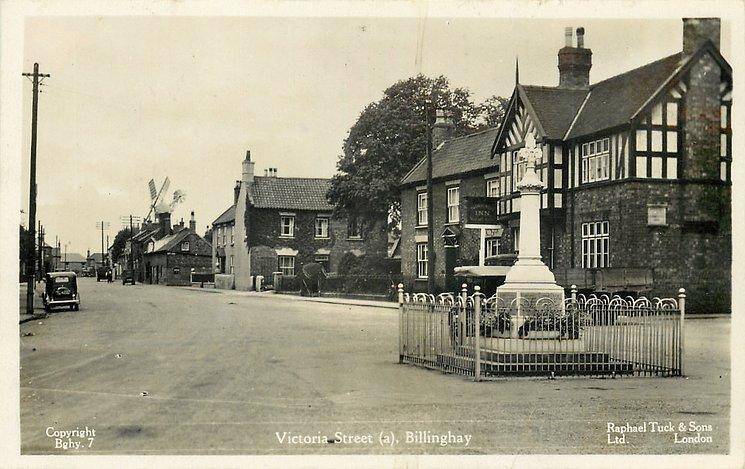
The surname Motley is a fascinating example of an English name that likely has multiple origins, ranging from geographic locations to occupational descriptions.
Geographic Origins
The most common theory is that the name is topographic or habitation-based, deriving from a specific place. It is often linked to the lost or minor locality of Mutlow or Motlow.
- Etymology: The name is believed to stem from the Old English words mot (meaning "meeting" or "moot") and hlāw (meaning "hill" or "mound").
- Significance: This suggests the original bearers lived near a Moot Hill—a traditional site where local courts or assemblies (the "moot") were held to discuss community laws and disputes.
Occupational Origins
A second theory suggests the name may have been occupational, relating to the textile industry.
- Etymology: Derived from the Middle English word motley, which described a cloth of mixed colors (often a woolen fabric).
- Significance: It could have been a metonymic name for a maker or seller of checkered or variegated cloth. While "motley" later became associated with the multicolored garments of professional jesters, the surname likely predates that specific association.
Early Records and Variations
The name has appeared in various forms throughout English history as spelling became standardized.
Historical Variations:
- Motlow
- Mottle
- Mutley
- Motteley
Notable Early Mentions:
- Early records of the name are frequently found in Cheshire and Staffordshire, supporting the idea that it originated from a specific northern or midland English locality.
- The name John de Mutlowe appears in 14th-century records, indicating the "de" (of) prefix common to geographic surnames of that era.
- Summary of Meaning
Feature
Description
Language of Origin
Old English / Middle English
Primary Meaning
"The meeting hill" (mot-hlāw)
Secondary Meaning
A maker/seller of variegated cloth
Regional Roots
Primarily the English Midlands (Cheshire)
As we learnt in Early Arrivals, the Robertson name joins the Watson line with my great grandfather Thomas Watson, who married Edith Robertson on January 1st, 1880.
I can trace the Robertson line in my family tree back to Petir Robertson, born in Fife, Fifeshire, Scotland, in 1500, and who married Margaret Atkens there.
Dunfermline Abbey
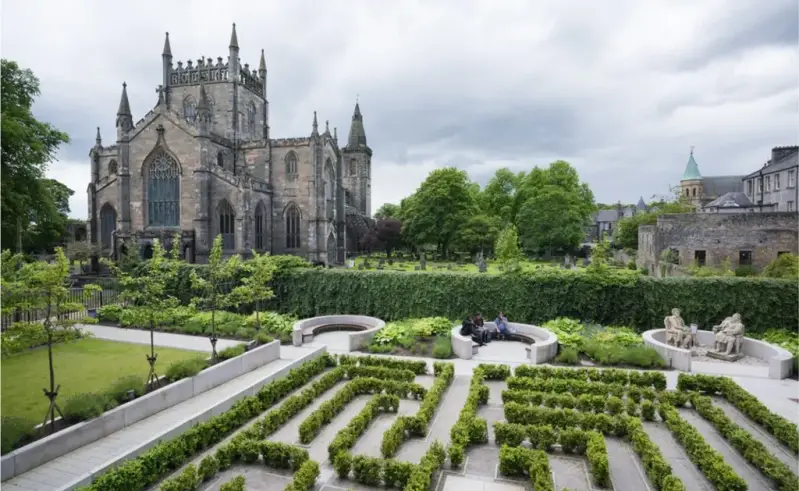
Life for someone born in the "Kingdom of Fife" around the year 1500 would have been defined by a tightly bound rural society, the rhythms of subsistence agriculture, and a landscape caught between the fading structures of medieval feudalism and the dawn of the early modern era.
The Daily Environment and Community
Fife at the turn of the 16th century was one of the most politically and economically significant regions in Scotland, nestled strategically between the Firth of Forth and the Firth of Tay. It was a patchwork of rich agricultural lowlands, rolling hills, and bustling coastal burghs (such as Crail, Culross, and St Andrews).
If Petir grew up in a typical rural setting, his home would have been in a fermtoun—a small cluster of low-lying, stone-and-turf cottages housing a handful of families who worked the land together. These houses typically featured thatched roofs, a central hearth with no proper chimney (meaning smoke drifted out through a hole in the roof or the door), and dirt floors shared occasionally with livestock during the harshest winter months.
Labor and the Land
Most of life was dictated by agrarian toil. Farming was organized around the "runrig" system, where strips of arable land were divided among the community.
- Crops: The staple crops were oats and bere (a hardy, ancient form of six-row barley), supplemented by small patches of kale, peas, or beans. Wheat was rare and mostly reserved for the elite.
- Livestock: Cattle were the primary measure of wealth and survival, alongside sheep and goats. Animals provided milk, cheese, wool, and leather, and heavy oxen were used to pull cumbersome wooden plows.
- The Seasons: Survival depended entirely on the harvest. Spring brought gruelling labour breaking up heavy soils, summer meant taking livestock to upland grazing pastures (shielings), and autumn was a frantic race against the notoriously damp Scottish weather to reap the crops before the winter rains set in.
Society and Status
Scotland in 1500 operated under a strict feudal hierarchy. Below the major barons, landowners, and church authorities sat tenant farmers, husbandmen, and cottars. A common family like the Robertsons would likely have been bound in some form of tenant service to a local laird, a feudal superior, or a powerful ecclesiastical institution (such as the Cathedral Priory in St Andrews, which held vast estates in Fife). Taxes, rents, and dues were frequently paid not in coin, but in kind—a portion of the grain harvest, butter, or labour.
Faith, Superstition, and Survival
The Catholic Church was the absolute center of spiritual, social, and communal life. The spire of a local parish church or the distant majesty of St Andrews Cathedral would have anchored the community's worldview. Life was deeply saturated with religious festivals, holy days, and traditional rituals, intertwined with a pervasive folk superstition regarding weather, protecting livestock, and warding off misfortune.
Life expectancy was low by modern standards. Childhood diseases, harsh winters, periodic outbreaks of sickness, and poor nutrition meant that making it to adulthood was a significant milestone. Surviving past 40 would have meant enduring decades of hard physical labor, damp weather, and the constant underlying anxiety of crop failure and famine. Yet, it was a life deeply connected to family, community, and the demanding Scottish earth.
The surname Robertson is a classic patronymic name, meaning "son of Robert." While it is found throughout the English-speaking world, its primary historical roots are firmly planted in Scotland.
Etymology and Derivation
The name is composed of two distinct parts:
- Robert: A Germanic name brought to England and Scotland by the Normans. It is derived from the Old High German name Hrodebert, where "Hrod" means "fame" and "Berht" means "bright" or "shining."
- -son: A suffix denoting lineage, common in Middle English and Scots.
In Gaelic, the equivalent name is MacRaibeirt, which also translates to "son of Robert."
The Scottish Clan Donnachaidh
While many people named Robertson simply descend from an ancestor named Robert, the most significant historical lineage belongs to Clan Donnachaidh (the Children of Duncan).
The Ancestry: The clan claims descent from the hereditary abbots of Dunkeld and the ancient Earls of Atholl.
The Turning Point: The name "Robertson" gained prominence through the 4th Chief, Robert Riach ("Grizzled Robert"). In 1437, he captured the assassins of King James I.
The Reward: In gratitude, King James II granted the family a charter in 1451, turning their lands into a free barony. Following this, the clan chiefs began using the surname "Robertson" in honour of Robert Riach, eventually becoming the standard name for the entire clan.
Historical Symbols
The history of the name is often represented by specific heraldic imagery:
- The Crest: A dexter hand holding up an imperial crown, commemorating the capture of the King's assassins.
- The Motto: Virtutis Gloria Merces (Glory is the reward of valour).
- The Clan Badge: A sprig of bracken or fine-leaved heath.
Variations and Septs
Because the name is so widespread, several variations and related names (septs) emerged over the centuries:
- Spelling variations: Robison, Robson, Roberson.
- Septs of Clan Donnachaidh: Names like Collier, Donachie, Duncan, Inches, and MacConachie are all historically associated with the Robertson clan.
Global Spread
During the 18th and 19th centuries, the Highland Clearances and general economic migration saw thousands of Robertsons leave Scotland for the United States, Canada, Australia, and New Zealand. Today, it remains one of the most common surnames in Scotland, typically ranking within the top ten.
The Wilkie name joins the Roberson family when James Robertson, David Robertson’s father, married Jean (or Jane) Wilkie in Abdie, Fife, Scotland on July 6th, 1810. She was born there on the 30th of July, 1784 to David Wilkie and Isabel (nee Scot). David’s father was Andrew Wilkie, born in Kinglassie, Fife, Scotland around 1740, and there the trail seems to peter out.
The surname Wilkie is a classic example of a "pet name" or diminutive that evolved into a permanent family name. It has deep roots in both Scottish and English history, primarily concentrated in the Lowlands of Scotland and Northern England.
Etymology and Derivation
The name is a double diminutive of the given name William. Here is how the linguistic evolution typically breaks down:
- William: Derived from the Old High German Willahelm, combining wil (will or desire) and helm (helmet or protection).
- Will/Wil: The common shortened form.
- Wil-ke: The suffix "-ke" is a Low German or Flemish diminutive (similar to "-kin") that was brought to Britain by Flemish settlers in the 12th century.
- Wil-kie: Over time, particularly in Scotland, the "-ke" ending softened into the "-kie" or "-ky" suffix we recognize today.
Essentially, a "Wilkie" was "little William" or "son of little William."
Historical Origins
The name first appeared in written records during the late medieval period. Because the Flemish were prominent traders and weavers who settled heavily in the east of Scotland (Fife, Midlothian, and Angus), the name became firmly established there.
Early Records: One of the earliest mentions is a David Wilkie, who was documented as a witness in St. Andrews, Scotland, in 1495.
The Fife Connection: The Wilkies of Gilchriston and the Wilkies of Foulden were prominent land-owning families in the 16th and 17th centuries.
The Clan Graham: While Wilkie is an independent surname, it is often associated as a sept (a family branch) of Clan Graham. This means that historically, those bearing the name Wilkie may have sought the protection of or owed allegiance to the Earls of Montrose (the chiefs of Clan Graham).
Notable Figures
The name carries a legacy of artistry and intellect, most notably through:
- Sir David Wilkie (1785–1841): A renowned Scottish painter known for his genre scenes and royal portraits. He was a favorite of King George IV and is considered one of the pioneers of British narrative painting.
- Wendell Willkie (1892–1944): Though he spelled it with two 'l's, he was a famous American lawyer and the Republican nominee for President in 1940.
Variations
Depending on the region and the era of the census taker, you might find the name spelled as:
- Wilky
- Wilkey
- Wilkay
- Wilkison (Son of Wilkie)
David Robertson married Mary Ann Walker on June 30, 1847, in Shoreditch, London, England, She had been born to Richard Walker and Mary (nee Carter) on February 2, 1812, at Edith Weston, Rutland, England.
I can trace the Walker family line back to a Thomas Walker, who was born in Seaton, Rutland, England about 1560 and who married Agnes (Agneta) Boyer there on October 20th, 1582.
Life for Thomas Walker and Agnes (Agneta) Boyer in the late 16th century—amidst the reign of Queen Elizabeth I—would have been deeply rooted in the rhythm of the English countryside, shaped by agricultural labor, tight-knit village communities, and the shifting religious and economic landscapes of Elizabethan England.
Seaton and the Rutland Landscape
Seaton was (and is) a small, elevated rural parish sitting above the River Welland in England’s smallest historic county, Rutland. In 1582, the village was an intimate community where nearly everyone knew everyone else's business. Most dwellings were modest, timber-framed or stone cottages with steeply pitched thatched roofs, centered around the parish church of All Hallows and local manor lands. Life here was inextricably tied to the seasons, the-day-to-day management of open fields, livestock grazing, and the harvest.
Daily Work and Sustenance
As common folk living in a small agricultural settlement, Thomas and Agnes would have relied directly or indirectly on husbandry and farming.
Agricultural Labor: Much of the community’s labour revolved around cultivating crops like wheat, barley, rye, and oats, alongside tending sheep and cattle. A man of Thomas's station likely worked as a smallholder, husbandman, or agricultural labourer, putting in long hours from dawn until dusk, particularly during the gruelling weeks of the hay and corn harvests.
Domestic Economy: Agnes’s daily life would have centred heavily on the demanding domestic economy. This included managing a household without modern conveniences—preparing meals over an open hearth, baking bread, tending a vegetable garden (or "gardener's plot"), brewing small beer (the standard, safer alternative to water), and processing dairy. Women of this era also frequently spun wool or flax, sewing and repairing clothing for the family.
Marriage in Elizabethan Rutland
Their wedding on October 20, 1582, would have taken place in the local parish church. Under Elizabethan law and the Book of Common Prayer, marriages had to be preceded by the calling of the banns on three successive Sundays to ensure no legal impediments existed.
- The ceremony would have been a public affair witnessed by family, neighbours, and the local parish rector.
- Marriage for people of their class was as much an economic partnership as it was a romantic union; a household was the fundamental unit of production and survival, meaning Thomas and Agnes had to coordinate closely to run a sustainable home.
Social and Cultural Realities
Community and Church: The parish church was the heartbeat of village life. Attendance at Sunday service was compulsory by law, and the church courts closely monitored moral behavior, church attendance, and neighborhood disputes.
Hardship and Uncertainty: Life in the 1580s came with substantial background anxieties. Infant and child mortality rates were high, and harvest failures—triggered by unseasonal weather or damp summers—could lead to soaring food prices and genuine hunger. Epidemics of influenza or other "sweating sicknesses" occasionally swept through rural communities, making life precarious.
The Elizabethan World: While great historical events—such as the looming threat of the Spanish Armada later in the decade (1588)—were discussed in market towns like nearby Uppingham or Oakham, daily life for the Walkers in Seaton would have felt predominantly local, governed more by the price of grain, the demands of the local lord of the manor, and the weather than by high politics.
The surname Walker is a classic example of an English and Lowland Scottish "occupational" name. It dates back to the Middle Ages and provides a window into the textile industry of medieval Europe.
Etymology and Derivation
The name is derived from the Middle English word walkere, which itself comes from the Old English wealcan, meaning "to move about," "to roll," or "to turn."
While we associate "walking" with travel today, in the context of the 13th and 14th centuries, it referred to a specific step in the cloth-making process known as fulling.
The Process of "Walking"
Before wool cloth could be used, it had to be cleaned and thickened to make it windproof and water-resistant. This process involved:
Scouring: Soaking the raw cloth in a mixture of water and "fuller's earth" (a type of clay) to remove grease and oils.
Thickening: The "walker" would literally tread or trample upon the sodden cloth in a large trough.
Result: This constant trampling matted the fibers together, shrinking the cloth and making it much denser and more durable.
Regional Variations
Interestingly, the surname you received often depended on where your ancestors lived in Great Britain. The cloth-finishing trade produced three distinct surnames based on the same job:
- Walker: Predominant in the North of England and Scotland.
- Fuller: Most common in the South and Southeast of England.
- Tucker: Primarily found in the Southwest (especially Devon and Somerset), derived from the Old English tucian, meaning "to torment" or "to dress cloth."
Historical Significance
Early Records: One of the earliest recorded instances of the name is Gerard le Walker, appearing in the Gloucestershire "Pipe Rolls" in 1248.
The Industrial Shift: By the late Middle Ages, the physical act of "walking" the cloth was largely replaced by water-powered fulling mills. However, the name remained firmly established as a hereditary surname.
Global Spread: Due to the prominence of the British textile industry, Walker became one of the most common surnames in the English-speaking world, ranking consistently within the top 30 most frequent names in the U.S. and the U.K.