

Unearthing ancient origins
A look at the genes I carry and what they say about where I originate from. Discover how our ancient past informs who we are today.

The whispers of our DNA
Our DNA holds a remarkable story, a genetic tapestry woven from countless generations. On this page, we explore the fascinating journey of our genes, revealing the ancient migrations and diverse ethnicities that have shaped who we are today. Each helix tells a tale of resilience, adaptation, and connection to a past stretching back further than recorded history.
Unravelling genetic heritage
Through modern DNA analysis, we can trace our lineage to ancient populations and pinpoint the geographical regions our ancestors called home. This journey isn't just about identifying percentages; it's about connecting with the human story, understanding the movements of people across continents, and recognizing the shared heritage that binds us all. Explore the specific ethnicities and historical markers embedded within our family's genetic code.

Echoes from the past
Beyond the scientific data, ancient origins give context to the historical records we uncover. They help us understand the broader narrative of our ancestors, providing insights into their lives, cultures, and the world they inhabited. This page aims to bridge the gap between genetic science and documented history, offering a comprehensive look at how our ancient past continues to resonate in our present identities. We invite anyone interested in DNA analysis and historical records to explore these fascinating connections.
It is Written in my DNA
One of the more interesting aspects of having your DNA tested (to me anyway) is what that can tell you about your origins. Rather like mapping my family history, this has taken me down avenues that I wouldn’t have ventured into otherwise. I used to hate history when I was at school. I guess it is a bit different when it is your own, and you get a bit older. Anyway, here is what my DNA tells me about my origins, both ancient and modern. There is enough here for a separate section.
What does ancient DNA show?
Advances in DNA analysis have made it possible to identify genetic traces from people who lived in particular times and places. These findings show that today’s populations are not always direct descendants of those who lived in the same regions thousands of years ago. Over millennia, waves of migration carried people and genes across oceans and continents, creating complex patterns of ancestry. In genetic terms, “race” is therefore an unreliable concept: every population is a mixture of earlier populations, which were themselves mixtures of others before them.
By studying specific DNA markers, researchers can trace ancient lineages, migration routes, and patterns of genetic diversity. This helps reveal how ancient peoples evolved, interacted, and adapted to their environments, offering a glimpse into their lives and cultures over thousands of years.
As some ancient groups shifted from hunting and gathering to farming, new genetic and cultural lineages developed. Many people today carry traces of both hunter-gatherer and early farmer ancestry. In these results, a higher percentage means your DNA more closely matches the genetic markers associated with that group.
Hunter-Gatherers
Ancient hunter-gatherers played a key role in early human migration as they moved in search of food, favourable climates, and natural resources. They gradually migrated from Africa to Eurasia, Australia, and the Americas over tens of thousands of years, often influenced by climate shifts. As they migrated, hunter-gatherers adapted to diverse landscapes and developed new survival strategies, laying the groundwork for genetic diversity and cultural development.
Farmers
The Neolithic Revolution, also known as the first Agricultural Revolution, saw human societies transition to an agricultural way of life by cultivating crops and domesticating animals. This created a more stable food supply, enabling the establishment of larger population settlements and more complex societies.
Hunter-Gatherer and Farmer Migration
As farming techniques spread, so did the migration of early farming communities, who brought seeds, tools, and knowledge with them. These migrations helped transform Europe, Asia, and Africa, often intermingling with local hunter-gatherer groups, and blending their distinct genetic makeup.
My DNA.
What does this mean for me as an individual? As far as I can understand it, because I am a mixture of my ancestors DNA, and they came from different cultures and regions (currently eleven different ethnic groups) and with no guarantee that I would have inherited their ancient markers anyway, this will never be a completely coherent story but a mixture of theirs.
Broadly speaking, my ancient DNA descends from three ancient hunter-gatherer and farmer populations in the following proportions:
Caucasus Hunter-Gatherer 23.8%
The Caucasus hunter-gatherer (CHG) lineage is probably the oldest distinct modern human genetic groups in my DNA makeup. They descended from a Common Western Eurasian meta-population formed when anatomically modern humans expanded into Europe from Africa about 45,000 years ago, and soon diverged from Western Hunter-Gatherers (WHGs), probably during the Last Glacial Maximum (LGM) at the peak of the most recent of the five glacial periods (ice ages) during the final stage of the Pleistocene Epoch sometime between 45-26,000 years ago. They further separated from the Anatolian Hunter-Gatherers (AHG) later, sometime between 25-14,000 years ago during the late LGM period. The Caucasus Hunter-Gatherers managed to survive in isolation since the late LGM period as a distinct population.
During the Neolithic and early Eneolithic periods, likely during the 4th millennium BC, Caucasus hunter-gatherers (CHGs) mixed with Eastern Hunter-gatherers (EHGs) on the Pontic–Caspian steppe, with the resulting population, almost half-EHG and half-CHG, forming the genetic cluster known as Western Steppe Herder (WSH).
Beyond contributing to the population of mainland Europe through the Bronze Age pastoralists of the Yamnaya, CHG also appear to have arrived on its own in the Aegean without Eastern European hunter–gatherer (EHG) ancestry and provided approximately 9–32% of ancestry to the Minoans. The origin of this CHG component might have been Central Anatolia.
Genetic analysis shows that Iranian-related ancestry, which was widespread in the Aegean by the Middle Bronze Age in association with the Minoan and Mycenaean cultures, had also spread as far west as Sicily in substantial proportion at least by the time of the Mycenaeans. One possibility is this ancestry spread west along with the Mycenaean cultural expansion. An arrival of the CHG-related component in Southern Italy from the Southern part of the Balkan Peninsula, including the Peloponnese, is compatible with the identification of genetic corridors linking the two regions and the presence of Southern European ancient signatures in Italy. Collected data from Iron Age individuals dating from 900 to 200 BCE (including the Republican period) group shows a clear ancestry shift from the Copper Age, interpreted as the addition of a Steppe-related ancestry component, and an increase in the Neolithic-Iranian component.
CHG/Iranian Plateau Neolithic-like ancestry is prominent in pre-steppe admixture Chalcolithic and Bronze Age (4500–2000 BCE) populations in Central Asia, like the Bactria–Margiana Archaeological Complex (which also had Anatolian Neolithic Farmer-related ancestry) as well as in the northwestern Indian subcontinent such as in sites in or adjacent to the Indus Valley Civilisation (who have mixed CHG-related and Ancient Ancestral South Indian ancestry). It is unclear as to whether the dispersal of CHG/Iranian Plateau-related ancestry eastwards to the Indian subcontinent was the result of the migration of farmers or an earlier dispersal of hunter-gatherers who later adopted farming, but this dispersal likely occurred sometime before 6000 BCE due to the lack of Anatolian Farmer-related ancestry in ancient South Asians, but which is present in the Iranian Plateau after this time. This pre-steppe CHG-related ancestry makes up a significant proportion of the ancestry of modern South Asians. WSHs, who were of significant CHG ancestry, also later migrated into Central Asia and South Asia
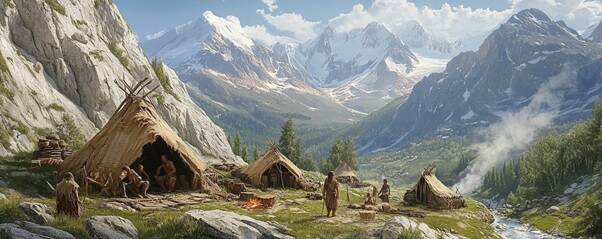
European Hunter-Gatherer 35.6%
European hunter-gatherers can be divided into two main two groups. The western group (Western Hunter-Gatherers or WHG) inhabited most of Europe, from Iberia to the Carpathians, while the eastern group (Eastern Hunter-Gatherers or EHG) inhabited an area stretching from the Baltic Sea to the Urals and downwards to the Pontic-Caspian steppe. In comparison with WHG, EHG had much higher affinity with the Ancient North Eurasians (ANE).
The Western hunter-gatherer group (WHG) is a distinct ancestral component of modern Europeans, representing descent from a population of Mesolithic hunter-gatherers who scattered over western, southern and central Europe, from the British Isles in the west to the Carpathians in the east, following the retreat of the ice sheet of the Last Glacial Maximum. It is sometimes considered synonymous with the concept of the Villabruna cluster, named after the Ripari Villabruna cave in Italy, known from the terminal Pleistocene of Europe, which is largely ancestral to later WHG populations.
WHGs share a closer genetic relationship to ancient and modern peoples in the Middle East and the Caucasus than earlier European hunter-gatherers. Their precise relationships to other groups are somewhat obscure, with the origin of the Villabruna cluster likely somewhere in the vicinity of the Balkans. The Villabruna cluster had expanded into the Italian and Iberian Peninsulas approximately 19,000 years ago, with the WHG cluster subsequently expanding across Western Europe at the end of the Pleistocene around 14-12,000 years ago, largely replacing the Magdalenian peoples who previously dominated the region. These Magdalenian peoples largely descended from earlier Western European Cro-Magnon groups that had arrived in the region over 30,000 years ago, prior to the Last Glacial Maximum.
WHGs constituted one of the main genetic groups in the postglacial period of early Holocene Europe, along with eastern hunter-gatherers (EHG) in Eastern Europe. The border between WHGs and EHGs ran roughly from the lower Danube, northward along the western forests of the Dnieper towards the western Baltic Sea. EHGs primarily consisted of a mixture of WHG-related and Ancient North Eurasian (ANE) ancestry. Scandinavia was inhabited by Scandinavian hunter-gatherers (SHGs), which were a mixture between WHG and EHG. In the Iberian Peninsula, early Holocene hunter-gathers consisted of a mixture of WHG and Magdalenian Cro-Magnon ancestry.
Once the main population throughout Europe, the WHGs were largely replaced by successive expansions of Early European Farmers (EEFs) of Anatolian origin during the early Neolithic, who generally carried a minor amount of WHG ancestry due to admixture with WHG groups during their European expansion. Among modern-day populations, WHG ancestry is most common among populations of the eastern Baltic region.
European hunter-gatherer
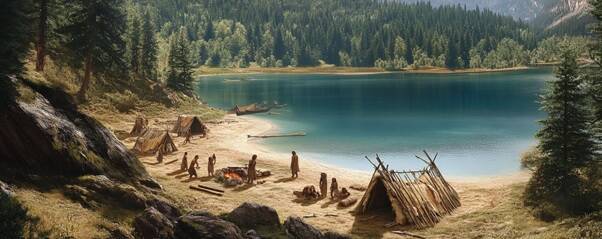
Anatolian Neolithic Farmer 40.6%
Neolithic Anatolian populations derive a large fraction of their ancestry from the Epipaleolithic Anatolian population, suggesting that farming was adopted locally by the hunter-gatherers of central Anatolia. Recent genetic studies have shown that in Europe, farming was introduced by an expansion of farmers from Anatolia who were closely related to those from Barcın. These farmers replaced Western hunter-gatherers (WHG) to a large extent, ultimately becoming the main genetic contribution to current European populations, especially those of the Mediterranean. So, the largest and most recent segment of my ancient DNA originates from Farmers in an area in Asia Minor which is now present-day Turkey.
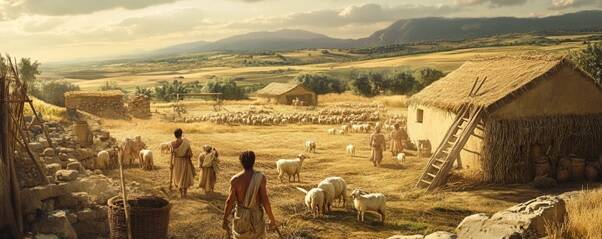
Anatolia/Asia Minor in the Greco-Roman period (circa 200 BC).
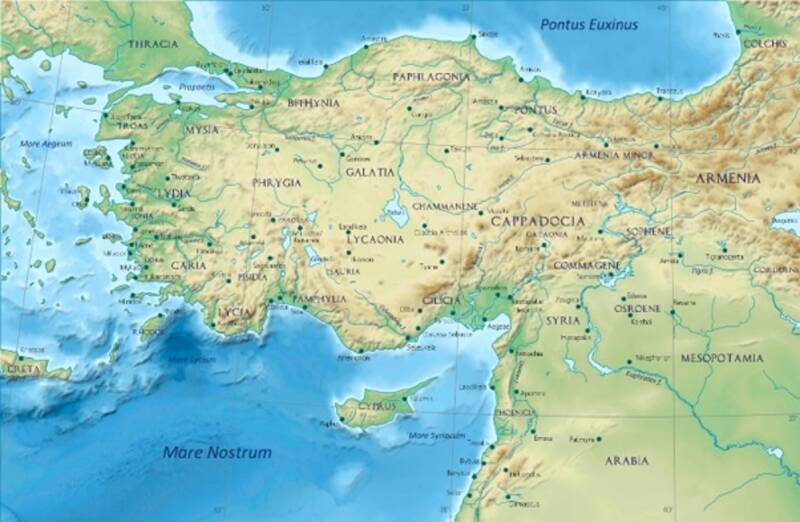
The analysis of my Ancient DNA has been further broken down to four historical era.
The Bronze Age
The Bronze Age, spanning from approximately 3300 to 1200 BCE, marked a significant advancement in human civilization. Characterized by the use of bronze — an alloy made primarily of copper and tin — this era saw the rise of urbanization, trade, and the development of writing systems. Societies during the Bronze Age experienced remarkable progress in agriculture, allowing for more stable food supplies, which in turn supported population growth and the establishment of complex societies.
Architectural achievements flourished, with the construction of monumental structures such as temples, palaces, and fortifications. Notable Bronze Age civilizations include the Sumerians in Mesopotamia, the Indus Valley Civilization in South Asia, and the Minoans on the island of Crete. These cultures contributed significantly to the arts, technology, and governance.
Trade networks expanded dramatically during this period, connecting disparate regions and facilitating the exchange of goods, ideas, and cultural practices. Bronze, being a more durable material than stone or copper, revolutionized tool and weapon making, thereby enhancing agricultural productivity and military capabilities.
Religious and ideological systems also became more elaborate, influencing the social and political structures of these ancient societies. The Bronze Age laid much of the groundwork for future advancements, setting the stage for the Iron Age and the further evolution of human civilization.
There are three distinct genetic populations in my Ancient DNA from the Bronze Age.
Central Steppe (2100–1800 BC)
Sub-population(s)
Sintashta culture 50.6%
The Sintashta culture arose in the Southern Urals during the Middle Bronze Age and is widely regarded as the origin of the Indo-Iranian languages. DNA samples from Sintashta individuals show a strong connection to the Corded Ware culture and are shifted toward Early European Farmers when compared with the Yamnaya culture. This evidence supports the idea that the Sintashta culture emerged through an eastward migration of peoples from the Corded Ware culture.
European Farmer (6300–2800 BC)
Sub-population(s)
European Farmer 38.8% (38.8%)
Recent genetic studies have shown that in Europe, farming was introduced by an expansion of early farmers from Anatolia who were closely related to those from Barcın. These farmers replaced Western hunter-gatherers (WHG) to a large extent, ultimately becoming the main genetic contribution to current European populations, especially those of the Mediterranean.
Bronze Age Caucasian (3700–1700 BC)
Sub-population(s)
Kura-Araxes Culture 7.8%
North Caucasian (Middle Bronze Age) 2.8%
When the Caucasus Hunter-Gatherer ancestry is taken as a local baseline and the oldest Eneolithic Caucasus individuals as a proxy for the local Late Neolithic ancestry, a substantial increase in ancestry related to Anatolian Neolithic Farmers can be noticed in the Bronze Age. Maykop individuals from the North Caucasian piedmont zone are genetically similar to South Caucasian Kura-Araxes individuals. After the Bronze Age, North Caucasian populations must have received additional gene-flow from steppe populations that now separates them from Georgians, who largely retained the Bronze Age ancestry profile.
The Iron Age
The Iron Age is generally considered to have begun around 1200 BCE and lasted until roughly 600 CE, depending on the region. In Europe, it is often divided into the Early, Middle, and Late Iron Ages, each characterized by distinct cultural and technological developments.
The Iron Age is characterized by the widespread use of iron and steel for tools, weapons, and other artifacts. This period saw significant technological advancements, including the development of iron smelting techniques that allowed for more efficient and stronger metal production. Iron tools and weapons became more common, leading to changes in agricultural practices, warfare, and daily life.
The Early Iron Age is associated with the Hallstatt culture in Central Europe, known for its rich burial sites and elaborate grave goods. The Middle Iron Age saw the rise of the La Tène culture, which spread across much of Europe and is characterized by its distinctive art style and craftsmanship.
During the Iron Age, societies became more complex and stratified, with the emergence of powerful chieftains and warrior elites. Trade networks expanded, linking distant regions and facilitating the exchange of goods, ideas, and technologies. The increased use of iron also had profound impacts on agriculture, allowing for more efficient farming and increased food production, which in turn supported population growth and the development of larger, more permanent settlements.
The Iron Age came to an end with the rise of the Roman Empire, which brought new technologies, cultural practices, and forms of governance to the regions it conquered. However, the legacy of the Iron Age can still be seen today in the technological advancements, artistic achievements, and societal changes that occurred during this transformative period.
In the Iron Age, my Ancient DNA begins to show a much greater diversity.
Insular Celt (600 BC–AD 100)
Sub-population(s)
Insular Celt 32.4%
In 2021, a major archaeogenetics study uncovered a migration into southern Britain during the Bronze Age, over a 500-year period from 1300 BC to 800 BC. The migrants were genetically most similar to ancient individuals from France and had higher levels of Early European Farmer ancestry. During 1000–875 BC, their genetic marker swiftly spread through southern Britain, making up around half the ancestry of subsequent Iron Age people in this area, but not in northern Britain. The evidence suggests that, rather than a violent invasion or a single migratory event, the genetic structure of the population changed through sustained contacts between Britain and mainland Europe over several centuries, such as the movement of traders, intermarriage, and small-scale movements of family groups. The authors describe this as a plausible vector for the spread of early Celtic languages into Britain.
Continental Celt (800–50 BC)
Sub-population(s)
Continental Celt (Boii) 24.0%
The Continental Celts were various groups of Celtic speakers who inhabited large parts of Europe. Their early development is linked to the Hallstatt culture, which was characterized by advanced metalwork and fortified settlements. This was followed by the La Tène culture, which spread across much of Europe. Unlike their insular counterparts in Britain and Ireland, the Continental Celts gradually assimilated into Roman and Germanic cultures due to conquests and migrations, leading to the decline of their distinct languages and identities.
Iberian (700–50 BC)
Sub-population(s)
Cantabrian 10.0%
In the Iron Age, we see a consistent trend of increased ancestry related to North/Central European populations with respect to the preceding Bronze Age. The increase was 10–19% along the eastern Mediterranean coast where non-Indo-European Iberian languages were spoken; 11–31% at the Tartessian site of La Angorrilla in the southwest with unknown language attribution; and 28–43% at La Hoya in the north where Indo-European Celtiberian languages were likely spoken. This documents gene flow into Iberia during the Late Bronze Age or Early Iron Age, possibly associated with the introduction of the Urnfield tradition. (The name comes from the custom of cremating the dead and placing their ashes in urns, which were then buried in fields.) Unlike central or northern Europe where Steppe ancestry likely marked the introduction of Indo-European languages, in Iberia increases in Steppe ancestry were not always accompanied by switches to Indo-European languages. This is consistent with present-day Basques who speak the only non-Indo-European language in western Europe but overlap genetically with Iron Age populations showing substantial levels of Steppe ancestry.
Balto-Slavic (900–350 BC)
Sub-population(s)
Baltic 9.4%
Balto-Slavic speakers comprise around one-third of present-day Europeans and occupy nearly a half of the European subcontinent. There is a near consensus that the Baltic and Slavic languages stem from a common root, Proto-Balto-Slavic, which separated from other Indo-European languages. Modern Eastern Baltic populations show substantial differences to samples from the Bronze Age. Limited gene-flow from more south-western neighbouring regions after the Bronze Age is sufficient to explain this pattern, as nearly all modern populations besides Estonians have a higher amount of farmer ancestry than Lithuanians, especially for Central and Western Europe.
Colchian (780–30 BC)
Sub-population(s)
Colchian 9.2%
Colchis, which existed from the c. 13th to the 1st centuries BCE, is regarded as an early South Caucasian-speaking polity; the name of the Colchians was used as the collective term for early South Caucasian-speaking tribes which populated the eastern coast of the Black Sea in Greco-Roman ethnography. It resembles Bronze Age Caucasians, and also modern populations of western Georgia.
Italic and Etruscan (900–200 BC)
Sub-population(s)
Etruscan 8.8%
The Italic peoples were an ethnolinguistic group who are identified by their use of the Italic languages, which form one of the branches of Indo-European languages. The Latins achieved a dominant position among these peoples, establishing the ancient Roman civilization. During this development, other Italic peoples adopted the Latin language and culture in a process known as Romanization. This process was eventually extended to certain parts of Europe. A culture that is identifiably Etruscan developed in Italy about 900 BCE, approximately with the Iron Age Villanovan culture, regarded as the oldest phase of Etruscan civilization, and derived from the previous late Bronze Age Proto-Villanovan culture. In the 4th century BCE, Etruria saw a Gallic invasion end its influence over the Po Valley and the Adriatic coast. Meanwhile, Rome had started annexing Etruscan cities. This led to the loss of the northern Etruscan provinces. Etruscan civilization endured until its assimilation into the Roman society, beginning in the late 4th century BCE with the Roman–Etruscan Wars, continuing with the granting of Roman citizenship as from 90 BCE, and ending in 27 BCE with the establishment of the Roman Empire. The vast majority of the sampled Etruscans form a genetic cluster that overlaps with present-day Spanish individuals in a principal components analysis built with West Eurasian populations from the Human Origins dataset. The Etruscans harbour the three genetic ancestries (associated with Anatolian Neolithic Farmers, European Hunter-Gatherers, and Bronze Age pastoralists from the Pontic-Caspian Steppe) and resemble their Latin neighbours.
Germanic (AD 100–600)
Sub-population(s)
Iron Age Scandinavian 2.8%
Largely derived from a synthesis of Indo-European and indigenous North European elements, the Germanic culture developed out of the Nordic Bronze Age. An increasing population, together with worsening climatic conditions, drove the Germanic peoples to seek new lands farther south. Thus, the central European Celts found themselves under a growing pressure. The wanderings of the Germanic peoples, which lasted until the Early Middle Ages and destroyed the Western Roman Empire, were, together with the migrations of the Slavs, formative elements of the distribution of peoples in present-day Europe.
Illyrian (750–200 BC)
Sub-population(s)
South Illyrian 2.2% (2.2%)
The Illyrians were a group of Indo-European-speaking peoples who inhabited the western Balkan Peninsula in ancient times. They constituted one of the three main Paleo-Balkan populations, along with the Thracians and Greeks. The Illyrian individuals resemble present-day populations in northern Italy.
Yaz Culture (910–800 BC)
Sub-population(s)
Yaz culture 1.2%
The Yaz culture was an early Iron Age culture of Margiana, Bactria and Sogdia. It emerges at the top of late Bronze Age sites sometimes as stone towers and sizeable houses associated with irrigation systems. Ceramics were mostly hand-made, but there was increasing use of wheel-thrown ware. There have been found bronze or iron arrowheads, also iron sickles or carpet knives among other artifacts.
(Markers for the Yaz culture would certainly seem to be an outlying anomaly in my DNA)
The Roman Era
The Roman Era traditionally spans from the founding of the city of Rome in 753 BC to the fall of the Western Roman Empire in 476 AD. This period covers the Roman Kingdom, the Roman Republic, and the Roman Empire.
The Roman Era marks a significant period in ancient history characterized by the expansion and consolidation of the Roman Empire, which spanned across Europe, North Africa, and parts of Asia. This era saw the establishment of Roman law, governance, engineering, and cultural achievements that have had a lasting impact on Western civilization. The Romans were known for their advanced infrastructure, including roads, aqueducts, and monumental architecture like the Colosseum and the Pantheon. Their society was highly stratified, with a complex system of governance that included the Senate and the Emperor. The Roman military was a formidable force, contributing to the Empire's territorial expansions and security. The Roman Era also witnessed the spread of Latin language and Roman culture, which influenced numerous aspects of the modern world.
Roman Britain (AD 100–400)
Sub-population(s)
Roman Britain 37.8%
With the Roman Conquest of Britain in 43 AD came the first written records of England’s history. Julius Caesar had of course paid earlier visits to Britain in 55 and 54 BC however these had only been to please his adoring public back home in Rome. In 43 AD the Emperor Claudius resumed the work of Caesar by ordering the invasion of Britain under the command of Aulus Plautius.
The Romans quickly established control over the tribes of present-day southeastern England, but ran into resistance in the West, particularly in what is now Wales, lead first by a British chieftain of the Catuvallauni tribe known as Caractacus, and later by the Druids, the priests of the native Celtic peoples. Ten years later, Queen Boudica, a little upset at having her lands taken from her by the Romans and her two daughters raped, raised the Iceni tribe together with their southern neighbours the Trinovantes in open revolt, burning to the ground Londinium (London), Verulamium (St. Albans) and Camulodunum (Colchester) before being defeated by Roman legions returning from Wales where they had again been attempting to quell the Druids in Anglesey.
The Romans gradually extended their control into northern and western England, with legions at York, Chester and Caerleon marking the limits of the ‘Civil Zone’. Finally, they moved northwards defeating the Caledonian tribes under the leadership of Calgacus at the battle of Mons Graupius in present day northeastern Scotland. The Romans gradually gave up their conquests in Scotland until in 122 AD the emperor Hadrian ordered the construction of a wall from the west coast of Britain to the east. When Hadrian died in 138 AD his successor Antonius Pius abandoned the newly completed wall and again pushed northwards. A new frontier, the Antonine Wall was established between the Forth and Clyde rivers in Scotland. Around 160 AD the Antonine Wall was abandoned and thereafter Hadrian’s Wall again became the northern boundary of the Roman Empire in Britain.
So, while Roman Britan enjoyed a period of relative stability and significant cultural transformation, with the Roman Empire establishing a strong presence across much of the island marked by the construction of major roads, towns, forts, and the adoption of Roman customs by the local population, the fact that they faced ongoing resistance from various British tribes, particularly in the north meant that around AD 100 as many as 50,000 troops were stationed in the province. As well as military combat and training, the army constructed forts, buildings and roads stretching across the country. Each substantial fort was surrounded by a Vicus (civilian settlement) where Roman soldiers and administrative officials, drawn from all over the Empire, would have had the opportunity to genetically enrich the local population. In addition, a growing Romano-British elite emerged, with many local leaders adopted Roman names and customs, building villas and integrating into the Roman administrative system.
The disintegration of Roman Britain proper began with the revolt of Magnus Maximus in AD 383, although the province had been troubled for at least a century before this. After 12 years as a military commander in Britain, Maximus was proclaimed Emperor by his troops and took a large part of the British Roman garrison to the Continent where he dethroned the emperor Gratian, before being killed himself by the next emperor, Theodosius, in AD 388. The remaining Roman soldiers began to withdraw from Britain at the end of the 4th century as the need to protect Rome itself from invading forces grew.
Germanic (AD 100–630)
Sub-population(s)
Frisii 15.2%
Goth 10.4%
Europe experienced a profound cultural transformation between Late Antiquity and the Middle Ages that laid the foundations of the modern political, social, and religious landscape. During this period, colloquially known as the Migration Period, also known as the Barbarian Invasions, there were large-scale migrations that saw the fall of the Western Roman Empire and subsequent settlement of its former territories by various tribes, and the establishment of the post-Roman kingdoms.
Roman Illyria (AD 100–600)
Sub-population(s)
Roman Illyria 12.4% (12.4%)
Individuals from Roman Illyria are shifted away from the Iron Age Illyrian population in the direction of Imperial Romans and resemble present-day central-north Italian populations.
Roman Italy (20 BC–AD 600)
Sub-population(s)
Latium 8.4%
Imperial Rome describes the period of the Roman Empire (27 BCE to 476 CE) following Julius Caesar’s assassination, which ultimately ended Rome’s time as a republic. Rome grew from a city-state on the Tiber river into an empire that spanned the entire Mediterranean and extended onto all three surrounding continents. During the Imperial period, the most prominent trend is an ancestry shift toward the eastern Mediterranean. The distribution of Imperial Roman and Late Antiquity individuals largely overlaps with present-day South and Central Italian populations.
Slavic (AD 540–1100)
Sub-population(s)
Slav (Avar Period) 7.2%
Early Slavs were a collection of Indo-European peoples who first appeared in historical records around the 6th century AD. They initially occupied areas of Eastern and Central Europe and gradually expanded, settling regions from the Baltic Sea in the north to the Balkans in the south. Over time, they adopted Christianity and interacted with various neighbouring peoples, helping shape the formation of medieval Slavic states and laying the foundation for modern Slavic nations.
Roman Anatolia (100 BC–AD 700)
Sub-population(s)
Southwest Anatolian 5.8%
In both Imperial Rome and Roman/Byzantine Anatolia, the bulk of the individuals cluster within the core Anatolian cluster, with a few comprising the remaining clusters. The average position of the two locales where the Roman Empire was founded ~2000 years ago (Italy) and the place where it ended ~600 years ago (Anatolia) in the genetic landscape of West Eurasia was virtually indistinguishable, and that it resembled the core Anatolian populations of the Southern Arc. The Roman Empire in both its shorter-lived western part and the longer-lasting eastern centered on Anatolia had a diverse but similar population plausibly drawn, to a substantial extent, from Anatolian pre-Imperial sources. In an irony of history, although the Roman Republic prevailed in its existential military struggle against the Anatolians rallied by Mithridates VI of Pontus during the first century BCE, the final incorporation of Anatolia into the Roman Empire and the increased connectivity that ensued may have set the stage for the very same Anatolians to become the demographic engine of Imperial Rome itself. This recreated, in historical time, the mythical journey of Aeneas and his Trojan exiles from Anatolia to the shores of Italy.
Roman Pannonia (AD 130–600)
Sub-population(s)
Pannonia 2.4%
The first inhabitants of Pannonia known to history were the Pannonii, a group of Indo-European tribes akin to Illyrians. From the 4th century BCE, it was invaded by various Celtic tribes. Trade flourished between Latins and Celts for one and a half century before the sudden Roman invasion. The region was not, however, definitively subdued by the Romans until 9 BC, when it was incorporated into Illyricum, the frontier of which was thus extended as far as the Danube.
Roman Gaul (AD 130–500)
Sub-population(s)
Roman Gaul 0.2% (0.2%)
Gallo-Roman culture was a consequence of the Romanization of Gauls under the rule of the Roman Empire. It was characterized by the Gaulish adoption or adaptation of Roman culture, language, morals and way of life in a uniquely Gaulish context. The barbarian invasions beginning in the late 3rd century CE forced upon Gallo-Roman culture fundamental changes in politics, in the underpinning economy, and in military organization. The Gothic settlement of 418 CE offered a double loyalty, as Western Roman authority disintegrated at Rome.
Into the 7th century CE, Gallo-Roman culture would persist into the 7th century CE, particularly in the areas of Gallia Narbonensis that developed into Occitania, Cisalpine Gaul, Orléanais, and to a lesser degree, Gallia Aquitania. The formerly Romanized north of Gaul, once it had been occupied by the Franks, would develop into Merovingian culture instead.
Sub-Saharan African
Sub-population(s)
Pygmy 0.2%
This small genetic component is represented by present-day Sub-Saharan African populations due to the lack of sufficient ancient samples. It may well be something else entirely.
(Sub-Saharan Africa is definitely an outlier, and may well be an aberration)
The Middle Ages
The Middle Ages, also known as the medieval period, spanned from approximately the 5th century to the late 15th century. This era began with the fall of the Western Roman Empire in 476 CE and concluded with the dawn of the Renaissance and the Age of Discovery. The Middle Ages are often divided into three sub-periods: the Early Middle Ages (500-1000 CE), the High Middle Ages (1000-1300 CE), and the Late Middle Ages (1300-1500 CE).
The Early Middle Ages
In the Early Middle Ages, Europe underwent significant changes and transformations. The collapse of the Western Roman Empire left a power vacuum that was filled by various Germanic tribes, including the Franks, Visigoths, and Ostrogoths. These tribes established their own kingdoms, and the political landscape of Europe became fragmented.
The spread of Christianity played a pivotal role during this period. Monasteries and churches became centres of learning and preserved much of the knowledge from antiquity. The missionary work of figures like Saint Patrick in Ireland and Saint Augustine in England helped to spread Christianity throughout Europe.
Feudalism emerged as the dominant social and economic system. Lords owned large estates and provided protection to vassals in exchange for their loyalty and service. The serfs, who were bound to the land, worked the fields and provided agricultural produce to sustain the feudal hierarchy.
The High Middle Ages
The High Middle Ages saw relative stability and growth in Europe. The period is marked by the rise of powerful monarchies, increased agricultural productivity, and a growing population. The revival of trade and the growth of towns and cities contributed to economic expansion.
The Crusades, a series of religious wars initiated by the Latin Church, were a defining feature of the High Middle Ages. These campaigns aimed to reclaim the Holy Land from Muslim rule and had a profound impact on European society, fostering cultural exchange and increasing contact with the East.
Gothic architecture flourished during this period, with the construction of grand cathedrals such as Notre-Dame de Paris and Chartres Cathedral. The establishment of universities, like those in Bologna and Paris, marked the beginning of higher education and intellectual inquiry in medieval Europe.
The Late Middle Ages
The Late Middle Ages were characterized by a mix of prosperity and turmoil. The period witnessed significant developments in art, literature, and science, laying the groundwork for the Renaissance. However, it was also a time of crisis and conflict.
The Black Death, a devastating pandemic, swept through Europe in the mid-14th century, killing an estimated one-third of the population. This had profound social and economic consequences, leading to labour shortages and social unrest.
The Hundred Years' War between England and France, spanning from 1337 to 1453, was a prolonged conflict that reshaped the political landscape of both nations. The war saw the rise of legendary figures such as Joan of Arc and contributed to the decline of feudalism.
The Great Schism, which divided the Roman Catholic Church into two competing papacies, further weakened the authority of the Church. The schism, along with other religious disputes, set the stage for the later Reformation.
Culture and Society in the Middle Ages
Medieval society was hierarchical and structured. The three main classes were the nobility, the clergy, and the peasantry. The nobility, including kings, queens, and knights, held significant power and land. They were responsible for governing and protecting their territories.
The clergy played a crucial role in medieval life, not only in spiritual matters but also in education, politics, and healthcare. Monasteries were centres of learning and preserved classical texts through meticulous copying.
Peasants, who made up the majority of the population, were primarily engaged in agriculture. They lived in small villages and worked the land owned by the nobility. Life for peasants was often harsh, with heavy labour and limited rights, but they formed the backbone of medieval society.
Chivalry and courtly love were ideals that influenced the behaviour and values of the nobility. Knights adhered to a code of conduct that emphasized bravery, loyalty, and honour. The literature of the time, including epic poems and romances, celebrated these ideals.
Art and Architecture
Medieval art and architecture were deeply influenced by religious themes. Romanesque and Gothic styles dominated the period, with the latter characterized by pointed arches, ribbed vaults, and flying buttresses. Stained glass windows, illuminated manuscripts, and frescoes adorned churches and cathedrals, depicting biblical stories and saints.
Education and Knowledge
Education in the Middle Ages was primarily the domain of the clergy. Monasteries and cathedral schools provided basic education, focusing on religious instruction, Latin, and classical texts. The establishment of universities in the 12th century marked a significant development in higher education. These institutions offered advanced studies in theology, law, medicine, and the arts, attracting scholars from across Europe.
Trade and Economy
Trade and commerce experienced growth during the Middle Ages, particularly in the High and Late Middle Ages. The revival of long-distance trade routes, such as the Silk Road, facilitated the exchange of goods, ideas, and cultures. Trading centres like Venice, Genoa, and the Hanseatic League cities became hubs of economic activity. The development of banking and financial institutions also played a crucial role in the medieval economy.
The Role of Women
The role of women in the Middle Ages varied depending on social class and region. Noblewomen often managed estates in the absence of their husbands and were involved in political alliances through marriage. Women in religious life, such as nuns, had opportunities for education and played important roles in their communities. Peasant women worked alongside men in agricultural tasks and household duties. While women's rights and opportunities were limited, their contributions were essential to medieval society.
Legacy of the Middle Ages
The Middle Ages left a lasting impact on European history and culture. The period established foundational institutions, such as universities and parliaments, and contributed to the development of legal systems. The cultural achievements of the Middle Ages, including art, literature, and architecture, continue to be celebrated and studied.
The transition from the medieval period to the Renaissance marked a shift towards new ways of thinking and exploring the world. The advancements made during the Middle Ages in areas such as science, technology, and philosophy laid the groundwork for the intellectual and cultural flourishing that followed.
In conclusion, the Middle Ages were a complex and dynamic period that shaped the course of European history. From the fall of the Western Roman Empire to the dawn of the Renaissance, the medieval era was marked by significant changes, challenges, and achievements. Its legacy endures in the institutions, ideas, and cultural heritage that continue to influence the modern world.
Germanic (AD 700–1000)
Sub-population(s)
Scandinavian Viking (Telemark) 28.6%
Scandinavian Viking (Sealand) 4.4%
The period from the earliest recorded raids in the late 8th century CE until the Norman conquest of England in 1066 CE is commonly known as the Viking Age in the history of the Scandinavians. The Viking Age lasted until the mid-11th CE century, when the Christianization of Scandinavia was largely completed.
Insular Celt (AD 100–1000)
Sub-population(s)
Roman Britain 31.6%
After the Romans left Britain in the early 5th century, the island entered a turbulent phase known as the Dark Ages. This period was characterized by the decline of Roman infrastructure, the rise of local kingdoms, and frequent invasions by various groups, including the Anglo-Saxons, who began to settle in large numbers. The indigenous Britons struggled to maintain their cultural identity amidst these changes, leading to the formation of new political entities and alliances.
After the close of the 5th century, the Romano-Britons were driven from the east of the island, and the Saxons, though as yet unable to gain a hold on the western uplands, were able to prevent the natives from recovering the lowlands. Half a century later the position was worse. Driven from the region of walled cities, into the hills of Wales and the northwest, the provincials underwent an inevitable change. The Celtic element, never extinct, reasserted itself with reinforcement from Ireland. It changed the remnants of Roman civilization and in the end absorbed them. The Celtic language reappeared, and Celtic art emerged to develop in new and medieval fashions.
Byzantine Anatolia (AD 500–1100)
Sub-population(s)
Northwest Anatolian 20.2%
Southwest Anatolian 1.2%
The Byzantine Empire was the predominantly Greek-speaking continuation of the Roman Empire during Late Antiquity and the Middle Ages. Its capital city was Constantinople (modern-day Istanbul), originally known as Byzantium. Initially the eastern half of the Roman Empire (often called the Eastern Roman Empire in this context), it survived the 5th century fragmentation and fall of the Western Roman Empire and continued to exist for an additional thousand years until it fell to the Ottoman Turks in 1453.
The migration of Turks to the country of modern Turkey occurred during the main Turkic migration across most of Central Asia and into Europe and the Middle East which was between the 6th and 11th centuries. Mainly Turkic people living in the Seljuk Empire arrived in Turkey during the eleventh century. The Seljuks proceeded to gradually conquer the Anatolian part of the Byzantine Empire.
Baltic (AD 900–1050)
Sub-population(s)
Balt (Viking Age) 9.0%
In the 10th century AD, the various Baltic tribal chiefdoms started forming early realms. Regional tribal cultures developed in the territory of present-day Latvia and northern Lithuania, including the Curonians, Latgalians, Selonians and Semigallians.
Sardinian (AD 770–1000)
Sub-population(s)
Sardinian (Middle Ages) 3.2%
The early medieval individuals from the site of Corona Moltana have high fractions of local Nuragic ancestry and resemble present-day Sardinians.
Balkans (AD 500–1000)
Sub-population(s)
Balkans 1.4%
Before the Slavic migrations, the population of the Balkans was composed mainly of local Balkan peoples who had been Romanized. After the destructive campaigns of Attila the Hun and the Goths who were previously foederati, which resulted in the fall of the West Roman Empire, Eastern Roman Emperor Justinian I began the reconstruction of fortresses, cities, and Christianity. However, the Plague of Justinian (from 541–549 until the mid-8th century CE) decimated the native population, resulting in the weakening of the Pannonian and Danubian Lines.
North Caucasian (AD 650–1160)
Sub-population(s)
Alan 0.2%
The Anapa and Alan individuals cluster with modern North Caucasian populations. The close proximity to Saltovo-Mayaki samples as well as their clustering together suggest that proximal sources of Anapa could be similar to that of Saltovo-Mayaki, as these were contemporary individuals and both could be part of the Khazar Khaganate. The Khazars were a nomadic Turkic people that, in the late 6th century CE, established a major commercial empire covering the southeastern section of modern European Russia, southern Ukraine, Crimea, and Kazakhstan.
Sub-Saharan African 0.2%
Description as for the Roman Era (above).
So, how does this relate to my modern DNA markers? My current DNA, as expressed through Ethnicity Estimates has changed quite a bit over the years, as the databases they are based have grown, new populations have been incorporated, and the number of distinct ethnic groups that can be identified has increased.
England.
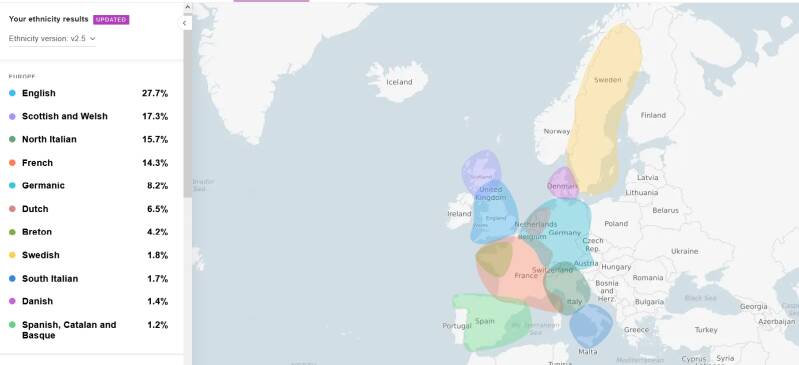
- 27.7% of my DNA comes from England, mostly from my mother through the Morley family.
Britain has been populated continuously for at least the past 15,000 years, since the last Ice Age came to an end. The ethnic landscape in this region has evolved through waves of conquest and migration. Over time these migrations have involved the pre-Celtic groups, the Brittonic-Celts, the Romans, Germanic tribes such as the Angles and Saxons, the Danes or Norse, and the Normans. Thus, English ethnicity is a complicated mix of Brittonic-Celtic, Roman, Germanic, Norse, and Norman influences.
English culture, politics, law, and technological developments have influenced world history in enormous ways — the result of Britain’s huge empire and position as the world’s pre-eminent superpower in the 19th century. At that time the sun was said to never set on the British Empire and Britain ruled over a quarter of the world’s people. Industrialization, the steam engine, railways, steamships, and steel production are just some of the world-changing inventions English people were responsible for.
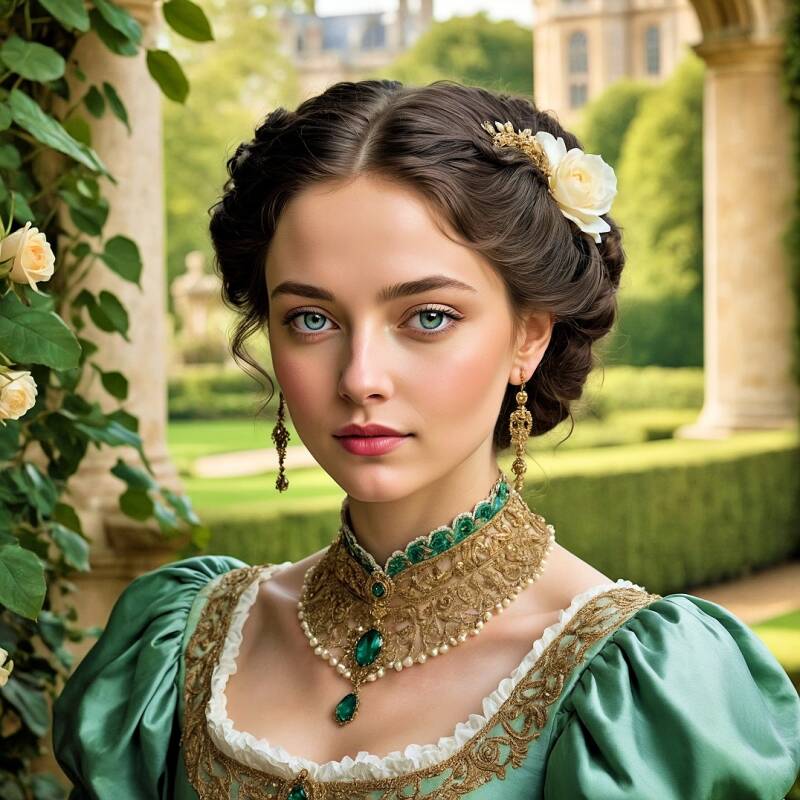
English Ethnicity

Scotland and Wales.
- 17.3% of my DNA comes from Scotland and Wales, all exclusively from my father through the Watsons and Scott’s.
Scotland and Wales were settled by the Celts as they moved across and came to dominate Western Europe in the first millennium B.C.E. What marks Scottish and Welsh ethnicity as distinct from English on the island of Britain is that after the Romans withdrew from Britain altogether in 410 C.E., England was settled by two Germanic groups called the Angles and Saxons, whereas the Celtic dimension remained strong in Scotland and Wales. There were also Brittonic Celtic kingdoms in parts of what became England, such as Cornwall.
Scottish and Welsh ethnicity did not remain entirely Celtic in its composition. Many Norse groups colonized parts of the Orkneys and the Western Hebrides of Scotland in medieval times and, like all parts of Britain, Wales and Scotland have experienced migration from overseas in modern times. Many people of Scottish and Welsh ethnicity are also found today throughout former parts of the British Empire, like the United States, Canada, Australia, and New Zealand.
Scottish and Welsh culture have distinctive elements, with Scottish Gaelic and Welsh both being Celtic languages. Wales is famed for its lamb, while Scotland is famous for haggis, a national dish made from offal. Both countries have also produced some of the world’s finest poets, including Robert Burns in the case of Scotland and Dylan Thomas from Wales.
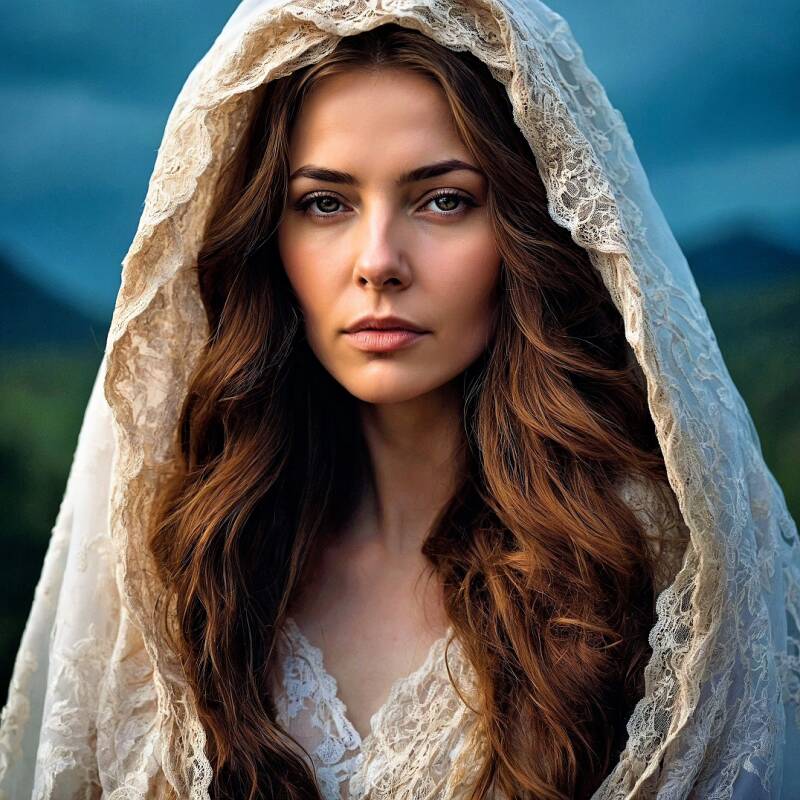
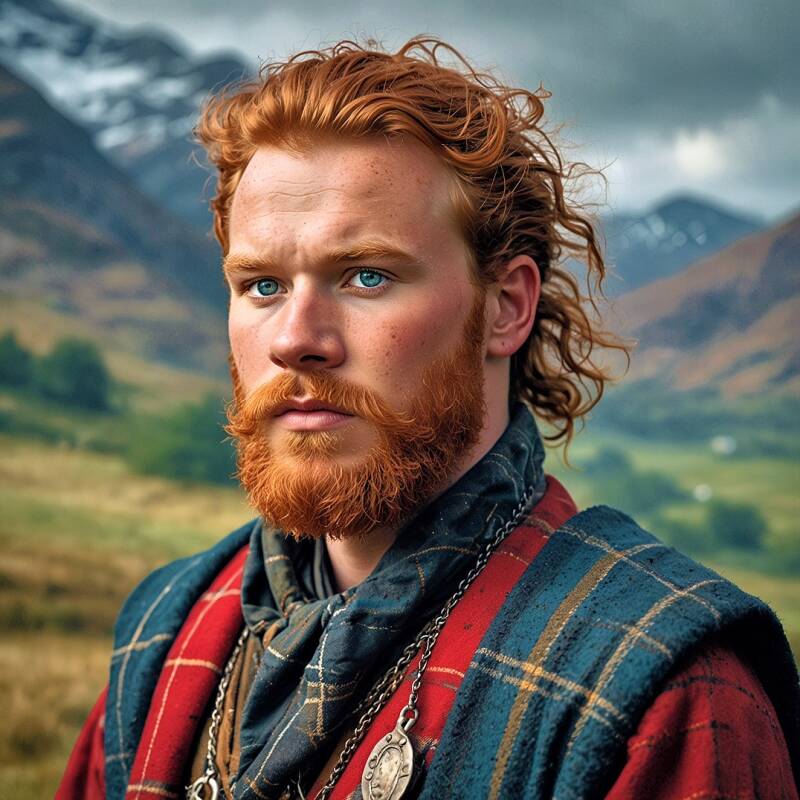
Scottish Ethnicity
Northern Italy.
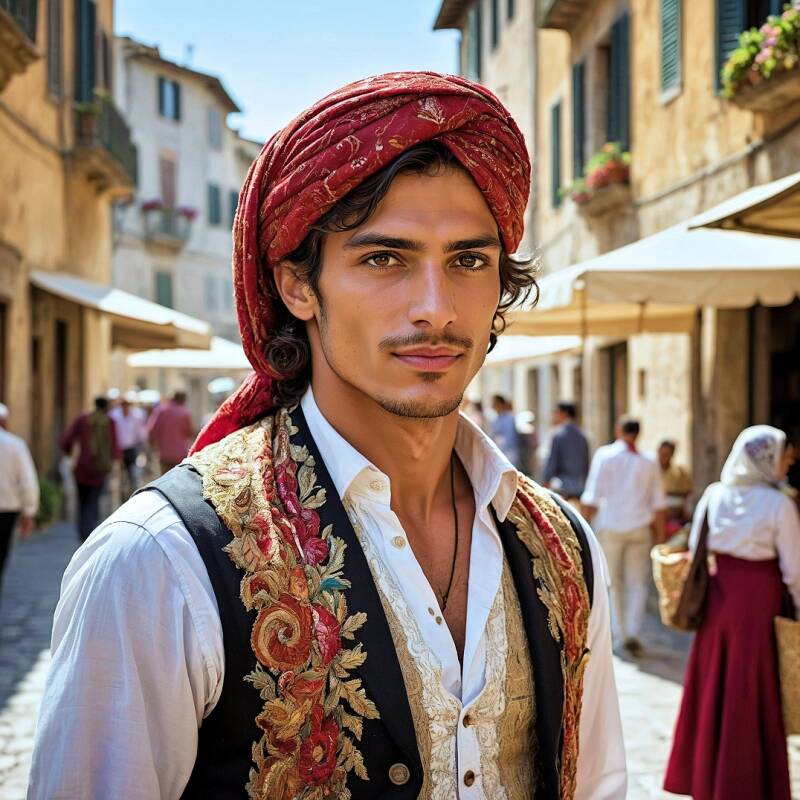
- 15.7% of my DNA comes from Northern Italy, and my mother's DNA. At least that makes sense.
Northern Italy was settled by the Ligurians and the Celts in the first and second millennia B.C.E, while Etruscan civilization in Tuscany in pre-Roman times was extremely sophisticated. The Romans moved into the region thereafter, following which northern Italy was so intensively colonized and settled by them that the entire ethnic and linguistic landscape was transformed.
The major change that occurred thereafter was the influx of Germanic groups to the region from the 4th century C.E. onwards as the Western Roman Empire began to collapse, specifically the Ostrogoths and the Lombards. Hence, Northern Italian ethnicity is primarily Romano-Germanic. Because of the manner in which the Romans conquered and colonized vast parts of Europe, the Levant, and North Africa, their ethnic footprint is found far beyond northern Italy.
The cultural legacy of Italy and its people is immense. The Italian Renaissance began in the 14th century and changed European civilization by the 16th century, with painters like Michelangelo, Titian, and Caravaggio transforming how people painted, while writers like Dante, Petrarch, and Machiavelli had an enormous impact on European literature and thought.
After centuries of economic stagnation, the economy of northern Italy flourished after World War II, dividing Italy into a wealthy, industrialized north and a poorer, rural south.
Northern Italian Ethnicity
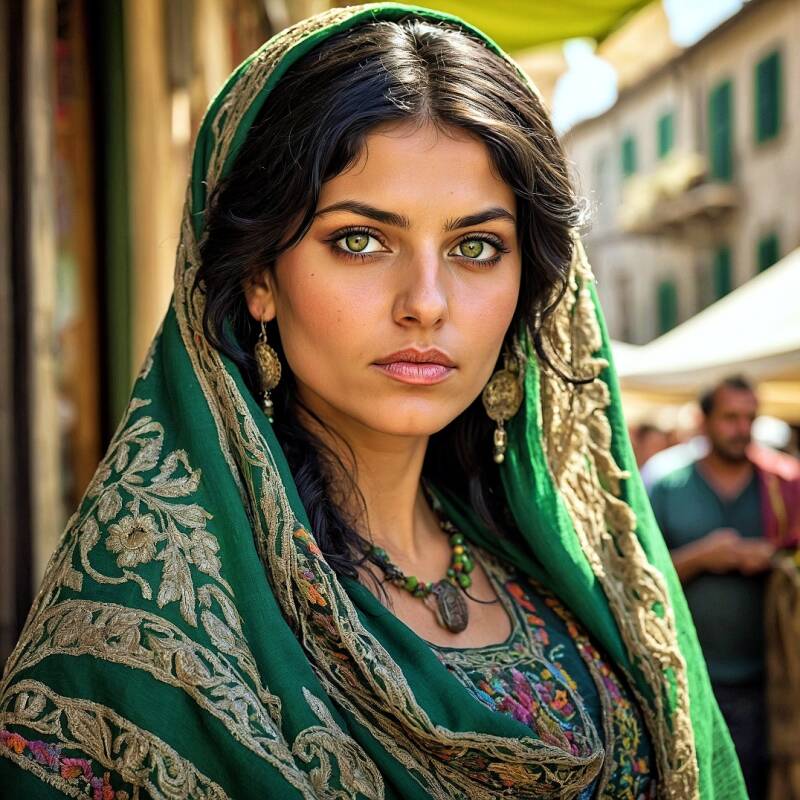
French.
- 14.3% of my DNA comes from France reinforcing the idea that the Morley's and other ancestors came over with William the Conqueror, or shortly thereafter.
The origins of the French people can be traced back to Celtic tribes called the Gauls that inhabited the region known as Gaul (modern-day France) around 500 B.C.E.
The Romans conquered Gaul in the mid-first century B.C.E. and established many colonies throughout the country. These settlements eventually grew into modern-day cities like Paris and Lyon. France’s position as the global center of wine and viticulture also began under Roman rule, as the climate there is ideal for grape-growing.
In the 5th century C.E.,the Romans and Gallo-Celtic population in the region were succeeded by Germanic groups such as the Franks and Burgundians. The modern word France literally means “the land of the Franks.” From all of this, the core ethnicity of French people is a mix of Celtic, Roman, and Germanic influences. It has been spread to other parts of the globe through French colonial activity, notably to Canada.
French culture is one of the most acclaimed in the world, with some of the finest writers and painters of the 19th and 20th centuries, with literary, intellectual, and artistic giants such as Emile Zola, Alexandre Dumas, Claude Monet, Paul Cezanne, and Albert Camus all hailing from France. During the Belle Époque era (c. 1871–1914) Paris was considered the cultural capital of the world.
French Ethnicity

Germanic.
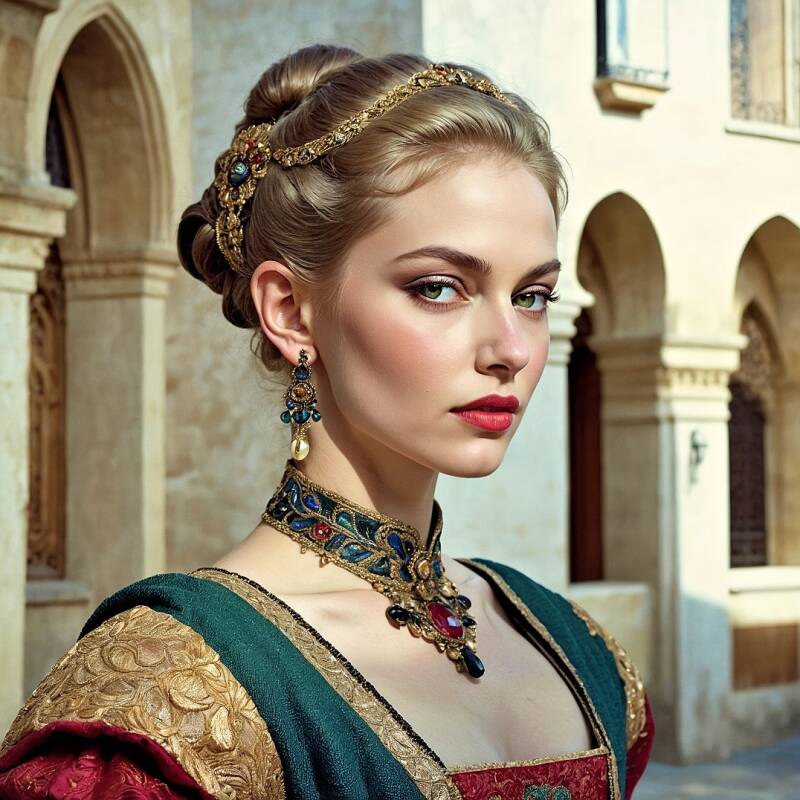
- 8.2% of my DNA is Germanic, most of that from my mother.
The Germanic people are a broad group of Indo-European people who moved across the Eurasian landmass in ancient times to inhabit Eastern, Central, and Northern Europe. The Germanic peoples originated and spread from southern Scandinavia and northern Germany starting around 500 B.C.E. They dominated the northern half of Europe for the next 1,000 years, while the Roman Empire covered roughly the southern half of the continent.
Germanic ethnicity is not confined to Germany and Austria. Over 5 million people of Germanic ethnicity left Europe and headed to the Americas in the 19th century, settling in large numbers in the United States, Argentina, Brazil, Chile, Paraguay, and several other countries.
Over the centuries, Germany and Austria have made significant contributions to European culture, particularly in the sphere of Classical music, with Bach, Handel, Mozart, and Beethoven also hailing from Central Europe. German writers, scientists, and philosophers like Immanuel Kant and Johann Wolfgang von Goethe are world-renowned. The stars of German cuisine are beer and pork, with food and beverage events like Oktoberfest having an international reputation.
Germanic Ethnicity
Dutch.
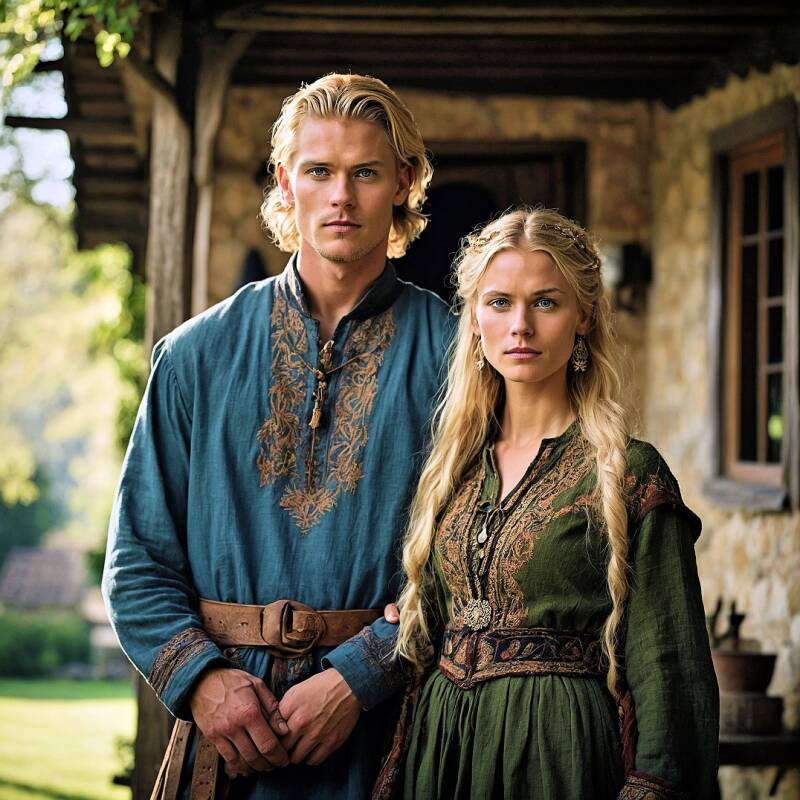
- 6.5% of my DNA is Dutch.
In ancient times the Low Countries (Netherlands) were inhabited by Celtic and Germanic people such as the Frisians and Batavii. While other parts of Western Europe were extensively colonized by the Romans and then conquered by new Germanic arrivals in late antiquity, the marshy lands of the Low Countries, particularly in the southern regions, remained less influenced by Roman occupation and Dutch people today remain strongly descended from these ancient groups. Thus, the northern province of the Netherlands is called Friesland after the Frisians. In the late 18th century the country was called the Batavian Republic.
Dutch as a language is a West Germanic language which has evolved from the tongue spoken in this area in the time of the Frisians and Batavii. Dutch ethnicity has spread to other parts of the world owing to colonial activity. In particular, many of the Afrikaner or Boer people of South Africa are descended from Dutch settlers, while there are also ethnically Dutch people in countries like Brazil, the United States, Argentina, Canada, Indonesia, Australia, and Surinam.
The Netherlands has become known for being one of the pioneering, liberal states of Europe. In the 17th century The Netherlands enjoyed a golden age of Dutch culture when the finest painters on the continent, such as Rembrandt van Rijn, Johannes Vermeer, and Frans Hals, worked there. Dutchmen like Desiderius Erasmus and Hugo Grotius were also some of the great philosophers and political scientists of early modern times.
Dutch Ethnicity
Breton.
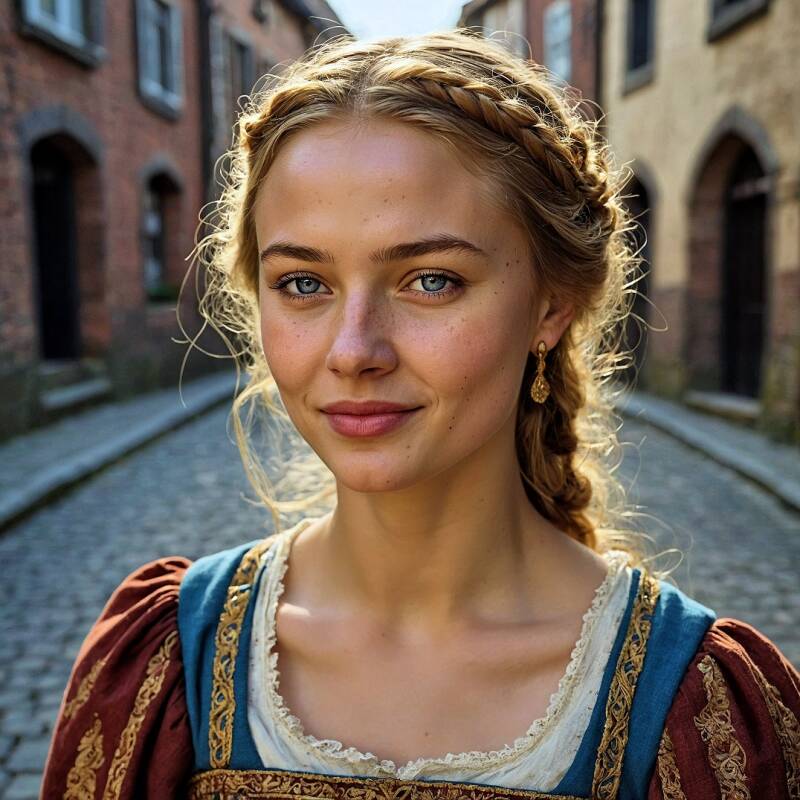
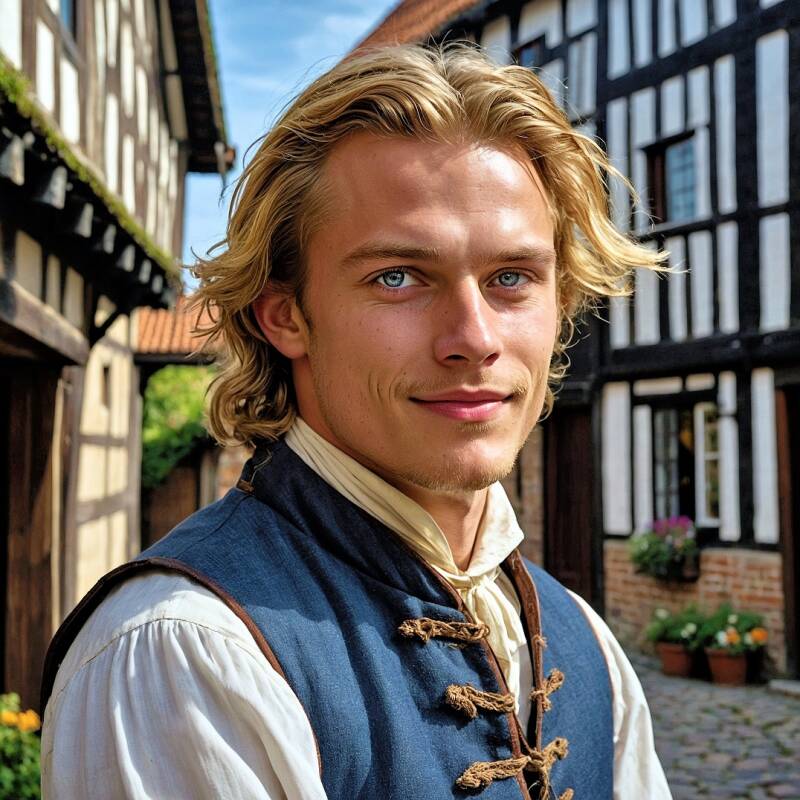
- 4.2% of my DNA is Breton.
The Bretons are an ethnic people who inhabit the Brittany region of north-western France. In ancient times Brittany was inhabited by the Gallo-Celts. It only experienced a minimal amount of Roman colonization owing to its geographical location and the Celtic dimension was reinforced in the Early Middle Ages as Celtic Britons from Wales and England migrated there in large numbers.
This Celtic element to Breton society has remained strong over the centuries. For instance, Brittany is the only part of France where a non-Romance language was widely spoken until modern times: Breton, a Southwestern Brittonic language of the Celtic family. The culture there is also closely connected to the sea and many Bretons over the centuries have been fishermen or mariners.
The Brittany region also retains its own distinct culture in terms of dress, cuisine, and music. Nantes, historically, was considered part of Brittany and served as its capital. However, since the 1941 administrative changes, Nantes is now part of the Pays de la Loire region. Despite this, it retains significant Breton cultural influences and an important intersection of Breton and French influences. During the Belle Époque era of the late 19th century the quaint Breton town of Pont-Aven became a mecca for some of the most important Impressionist painters of the day, like Paul Gaugin, Henry Moret, and Paul Sérusier.
Breton Ethnicity
Swedish.
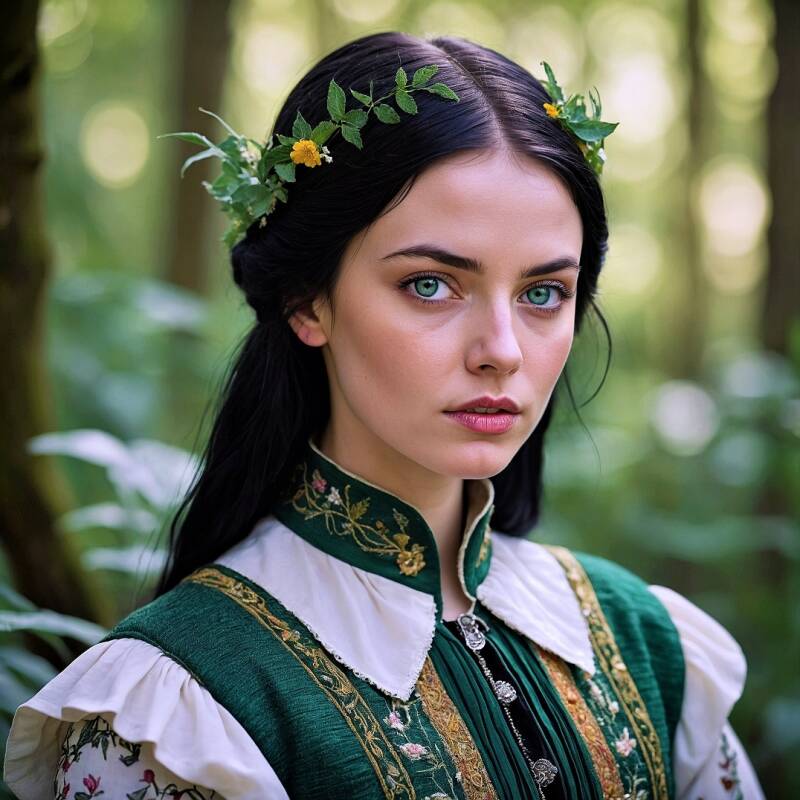
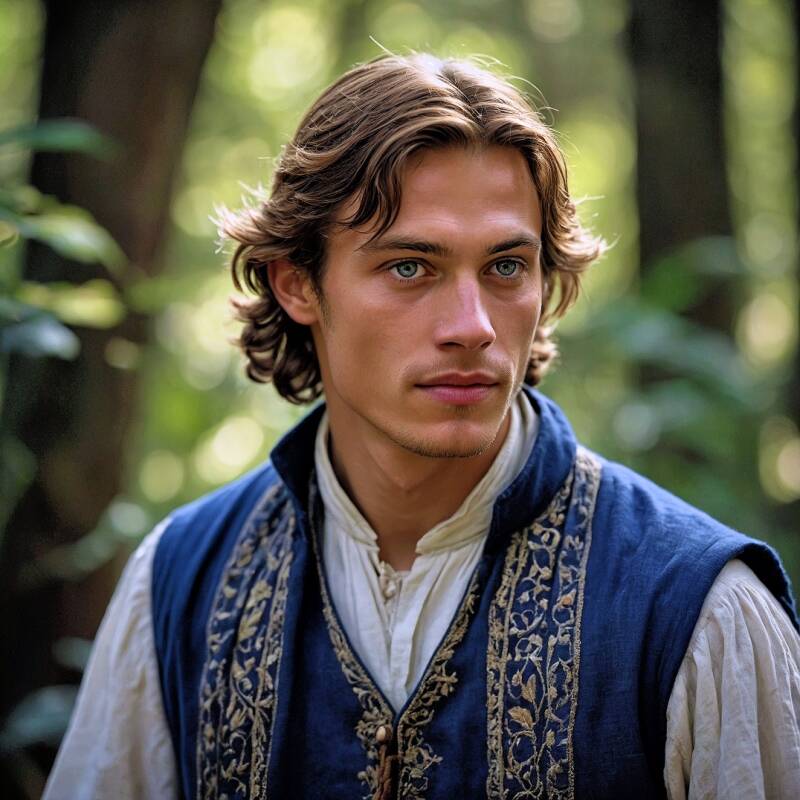
- 1.8% of my DNA is Swedish and is exclusively from my father. It seems that there is a little bit of Viking blood mixed in with the Scottish, which is entirely consistent with what we know about the Viking colonization of northern Scotland.
As early as the first century, a Germanic people known to the Romans as the “Suiones” inhabited what is now southern Sweden. Further north the Sámi or Lapp people, speakers of a Finno-Ugric language, have inhabited northern Sweden since 1500 B.C.E. Swedish ethnicity evolved from a mix of these Germanic and Sámi groups. The Germanic influence is greater, and Swedish is a North Germanic language.
The Swedes and their Norsemen ancestors played a major role in the medieval Scandinavian migrations. Specifically, people of Swedish ethnicity migrated down the great rivers of Eastern Europe, the Volga, Don, and Dnieper. In fact, the word “Russia” is derived from Rus, a term which comes from an Old Finnish word Ruotsi, meaning “Swede.” Therefore, there are ethnic elements that are of Swedish origin extending south through Russia, Belarus, and Ukraine to Crimea and Caspian Sea.
Sweden has had a substantial impact on European culture, with Ingrid Bergman playing a huge role in European cinema and pop groups like ABBA being extremely popular in the 1970s. In the 1970s and 1980s Swedish tennis players like Bjorn Borg, Mats Wilander, and Stefan Edberg dominated the sport.
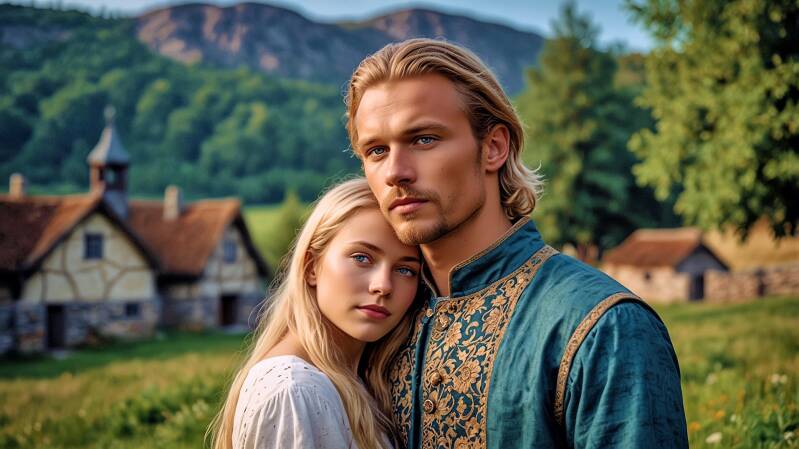
Southern Italy.
- 1.7% of my DNA is Southern Italian, again exclusively from my mother. Now there is a surprise, given that the only Italian ancestral origins I know of are in Northern Italy. This may well be some of that ancient DNA described above showing up.
Southern Italy has been a significant melting pot of cultures and ethnic groups over the last 3,000 years. Italic peoples such as the Osci or Oscans already lived in this area in the first millennium B.C.E. when they were joined by waves of colonists such as the Greeks, Carthaginians, and Romans.
The ethnic makeup of Southern Italians was further complicated in medieval times when the Berber and Arab Muslims of North Africa conquered Sicily, only to be replaced 200 years later by the Normans of northern France. Therefore, southern Italian ethnicity is a diverse mix of ethnic influences amongst which Italic (Roman), Greek, North African, and Norman are the most influential.
In turn, that same ethnic mix has been spread around the world through the Italian diaspora of the period from 1860 to 1920, when some 15 million Italians left their home country. Many of these migrants from Italy went to the United States, but they also settled in large numbers in Argentina and Brazil. More Argentinians are of Italian than Spanish heritage today.
The cultural legacy of this complex history is everywhere to see today in southern Italy, whether one is visiting Naples, Palermo, Pompeii, or Messina. Southern Italian cuisine has elements to it which are distinctive from that of northern Italy. For instance, some of the most iconic Italian dishes, like pizza and lasagna, have stronger roots in southern Italy than the north.
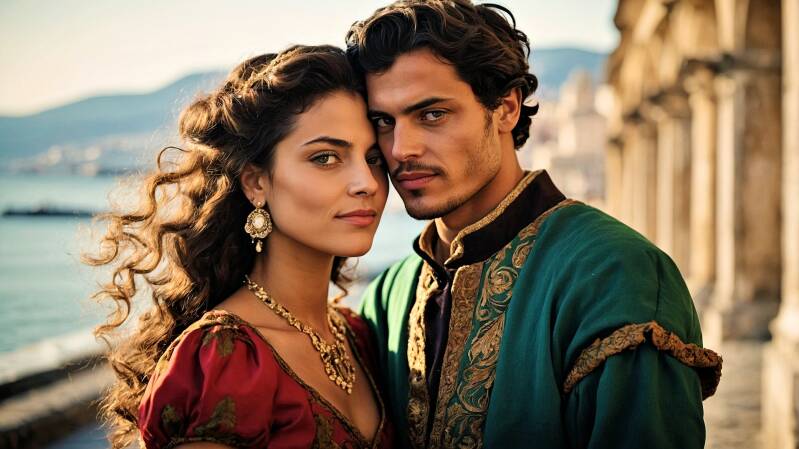
Dannish.
- 1.4% of my DNA is Dannish, which could either be a spillover from the Germanic content or reflect their settlement in England in medieval times.
The region of modern-day Denmark was inhabited by Germanic people in ancient times such as the Angles, Cimbri, and Jutes. The Jutland Peninsula region of mainland Denmark is named after the Jutes, who played a significant role in the early history of the area. Danish is a North Germanic language, which aligns with the historical presence of these Germanic tribes.
In medieval times, the Danes expanded outwards around the North Sea, notably to England, where English chroniclers referred to the Norse invaders as “Danes.” They also settled in the Faroe Islands and Iceland between the 9th and 12th centuries.
Danish culture is a mix of Germanic and Norse elements, a product of its position between Germany to the south and Scandinavia to the north. The country has produced internationally significant scientists like Tycho Brahe and Niels Bohr, as well as major philosophers like Søren Kierkegaard. It is also the home of the Dogme 95 filmmaking movement pioneered by directors like Thomas Vinterberg.
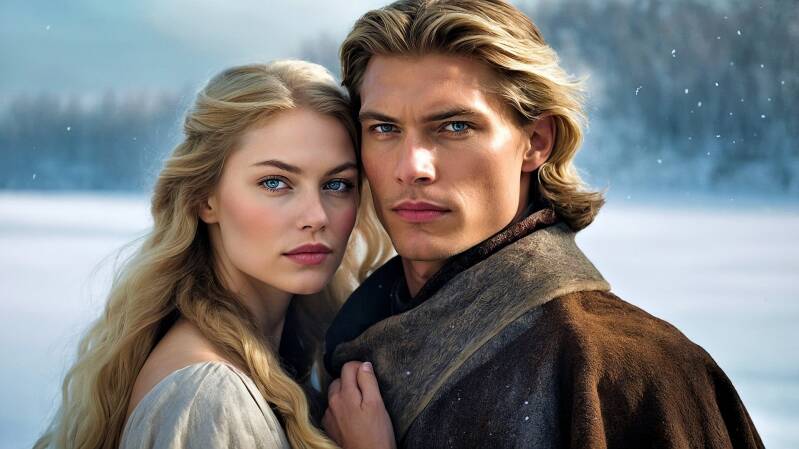
Spanish, Catalan and Basque
- 1.2% of my DNA is Spanish, Catalan and Basque, an unexpected addition that may be explained further in my Family History Stories.
The Spanish, Catalan, and Basque people trace their origins to waves of migration into the Iberian Peninsula since ancient times, including groups of Celts, Carthaginians, Greeks, Romans, Visigoths, and Suebi. In the 8th century, Muslim Berbers from North Africa conquered most of Iberia, and over the next 800 years, they impacted the region’s culture, architecture, and ethnic landscape before being pushed out of the peninsula by the Christian kingdoms in a process known as the Reconquista.
People of Spanish ethnicity populated much of the Americas and Philippines during Spain's vast colonial empire from the 16th–19th centuries. The Spanish language and Catholicism serve as unifying elements in the Hispanosphere, with Spain as the "motherland" and foundational pillar of Hispanic culture.
Catalans, from northeastern Spain and southwestern France, have a distinct culture and language, and developed one of Europe's oldest secular music traditions dating to the Middle Ages. They are known for their Catalan sparkling wine (cava) first made as early as 1851.
The Basques are one of Europe's oldest peoples, with a unique language and mythology featuring only female goddesses. They have a strong fishing tradition, monopolizing whaling until the 1500s, and their national game, Jai alai, is popular worldwide.
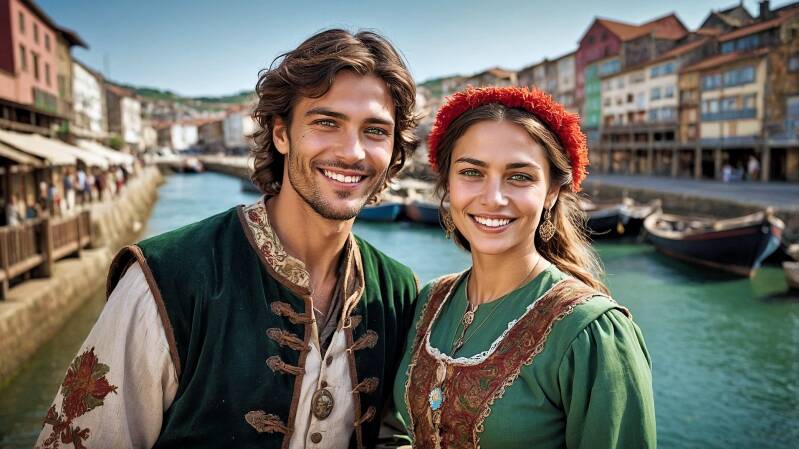
My Ethnicity Map as of August 2026
Information
We pride ourselves on our adaptability and commitment to excellence in every aspect of our service. Explore what we have to offer and how we can contribute to your success.